MyMeditimes: For many years, dietary guidelines have pushed low‑fat or skim milk as the better option. Whole milk, with its higher fat content, has often been viewed skeptically—seen as more caloric and possibly worse for heart health. But recent studies, meta‑analyses, and reviews are complicating that picture. Let’s take a close look at what happens when you switch from low‑fat milk to whole milk: the effects, benefits, risks, and what the evidence says. Milk is full of proteins having the calcium but in milk we have many category like cow milk, buffalo milk and goat milk including the category of fat or without fat milk.

Nutritional Differences: What You’re Getting
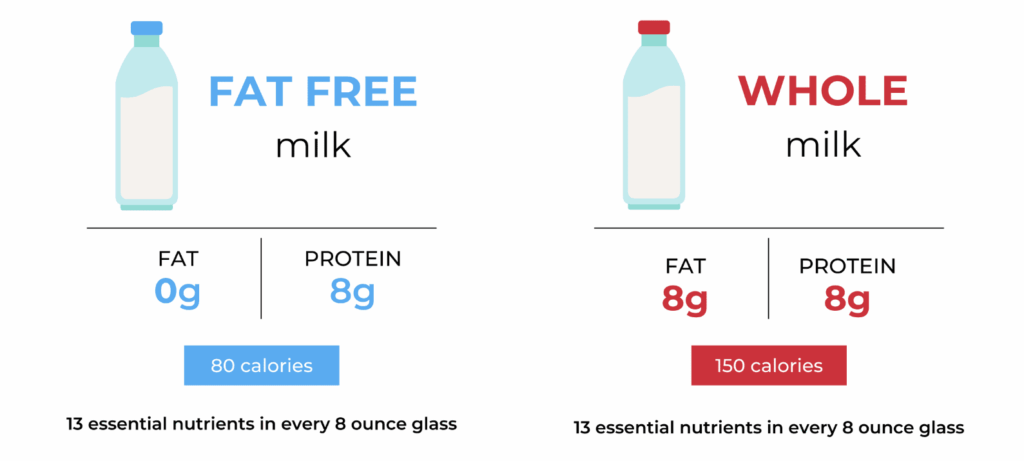
When comparing whole milk (often around 3.25–3.5% fat) to low‑fat versions (1%, 2%, or skim/fat‑free), the primary differences are:
- Fat content and saturated fat: Whole milk contains significantly more fat (including saturated fat).
- Calories: More fat = more calories per volume.
- Nutrient absorption: Some vitamins (A, D, E, K) are fat‑soluble, meaning fat helps their absorption. Whole milk naturally provides that fat which may improve uptake.
- Protein, calcium, etc.: These are very similar between whole and low‑fat milks; both provide good protein, calcium, potassium, and other micronutrients. The differences are mostly in fat and calories rather than the “core milk nutrients.”
So, when you drink whole milk instead of low‑fat, your intake of fat, saturated fat, and total calories per cup increases; your intake of protein, calcium, vitamin D etc. stays about the same.
Effects on Satiety and Weight
Contrary to what one might expect, switching to whole milk doesn’t always lead to weight gain. In some cases, it may even help with appetite control and possibly weight management. Here’s what the evidence suggests:
- Satiety: Because full‑fat milk is richer and slows digestion somewhat, people often feel fuller after consuming it. This can reduce snacking or overeating later on.
- Childhood adiposity: A meta‑analysis of observational studies found that children who consumed whole milk (vs reduced‑fat milk) had lower odds of being overweight or obese.
- Adult weight gain: Some controlled interventions show modest weight increase when consuming whole‑fat dairy instead of low‑fat, especially if calories aren’t adjusted elsewhere. For example, a study in young normotensive adults showed that whole‑fat dairy supplementation increased weight by about 1.0 kg (≈2.2 lbs) over several weeks compared to low‑fat dairy.
So, whole milk may help you feel more satisfied, but if you don’t reduce calories elsewhere, it can contribute to weight gain. The key is balance.
Cholesterol, Blood Lipids, and Heart Health
One of the biggest concerns with whole milk is its saturated fat content, which is traditionally linked to increases in LDL (so‑called “bad”) cholesterol, and thus potentially higher cardiovascular risk. What does current research say?
- In a randomized crossover intervention, healthy adults drinking 0.5 L/day of whole milk saw an increase in HDL (“good”) cholesterol vs skim milk, without significant negative changes in LDL, total cholesterol, triglycerides, glucose or insulin.
- Another feeding study found that substituting skim milk for whole milk decreased LDL levels and total cholesterol in healthy men.
- However, epidemiological cohort studies have found associations between whole milk intake and higher risk of cardiovascular disease (CVD) or higher mortality. For example, a study in Norway reported that high whole milk consumption was associated with higher CVD and all‑cause mortality compared to low‑fat milk consumption.
So, while some shorter‐term or smaller‐scale studies show that whole milk might not drastically worsen lipid profiles (and may even improve HDL), longer‐term population data suggests some risk with regular high whole milk consumption, especially in people who have or are prone to heart disease.
Impact on Blood Sugar, Diabetes Risk, & Metabolic Health
Switching to whole milk can also affect metabolic health in several ways:
- Some evidence suggests that full‑fat dairy is associated with lower risk of type 2 diabetes, possibly because the fat content slows glucose absorption and impacts insulin sensitivity.
- Whole milk’s fat may moderate glycemic response more than low‑fat or fat‑free milk, particularly if the milk is flavored or has added sugars (where low‑fat varieties often do).
- However, for people with metabolic syndrome, high blood sugar, or insulin resistance, any increase in caloric intake and saturated fat should be considered in the broader diet.
Other Health Effects & Considerations

Here are several additional effects, positive or negative, to be aware of when drinking whole milk instead of low‑fat:
- Vitamin and nutrient absorption
Fat‑soluble vitamins benefit from whole milk. Whole milk may help with better absorption of vitamins A, D, E, and K. - Blood pressure
Some studies show little difference, though an RCT in people with metabolic syndrome found no major adverse effect on blood pressure from consuming full‑fat dairy. - Taste, texture, satisfaction
Whole milk is creamier and often more satisfying to many people, which can impact dietary adherence. If you enjoy whole milk, you may find yourself more likely to stick with a milk‑consuming habit, which helps ensure you get the beneficial nutrients milk provides (calcium, protein, etc.). - Caloric load and overconsumption
Because whole milk is more calorie‑dense, there’s a higher risk of exceeding your daily calorie needs, especially if you consume milk in large quantities or in addition to high‑fat foods.
Risks & Downsides to Be Aware Of
If you switch to whole milk instead of low‑fat, there are some potential downsides, especially depending on your health status, diet overall, and amounts consumed.
- Higher LDL cholesterol in some individuals: Some studies, including longer interventions, show that whole milk increases LDL, which is a risk factor for cardiovascular disease.
- Greater caloric intake: If calories are not managed, the extra fat means extra calories, which could contribute to weight gain.
- Saturated fat concerns: For individuals with heart disease risk, high cholesterol, or other metabolic issues, saturated fat intake is something to monitor.
- Possible higher mortality associations: As noted, in population studies, regular consumption of whole milk (especially in large amounts) has been associated with greater cardiovascular or all‑cause mortality compared with low‑fat or skim milk.
Who Might Benefit—or Not—from Switching to Whole Milk
Depending on your health status, dietary goals, preferences, and risk factors, whole milk might be more or less appropriate:
| Situation | Whole Milk Might Be More Favorable | Whole Milk Might Be Less Favorable |
|---|---|---|
| Wanting more satiety or having trouble feeling full | ✔ | — |
| Children (after age 2) in some studies in terms of body‑composition outcomes | ✔ (some observational data) | If overconsuming calories; risk of early weight gain |
| Already meeting calorie & fat needs, without much saturated fat elsewhere | ✔ | — |
| Existing high LDL cholesterol, heart disease risk, metabolic syndrome | — | ✔ |
| Needing to manage weight or reduce calories | — | ✔ |
Practical Tips for Switching (If You Decide To)
If you’re considering drinking whole milk instead of low‑fat, here are ways to do it in a health‑minded way:
- Watch portion sizes: Even though whole milk is richer, consuming small or moderate amounts can help avoid caloric overload. For example, use in coffee, cereal, or parts of your diet, not necessarily as your sole dairy source.
- Balance total saturated fat: Monitor other sources of saturated fat (butter, fatty meats, cheeses) and reduce them if increasing whole milk.
- Combine with healthy fats and fiber: Pairing whole milk with fiber‑rich foods (fruit, whole grains) and unsaturated fats (nuts, seeds, olive oil) can moderate glycemic effect and improve overall nutrient balance.
- Choose minimally processed, non‑flavored: Avoid flavored whole milk that adds sugar. Use plain whole milk so you aren’t adding hidden sugars.
- Monitor outcomes: If you have concerns about cholesterol or heart risk, get lipid panels checked before and after making a change; observe weight trends.
What the Research Still Leaves Unclear
While the evidence has grown, there are still gaps and conflicting findings:
- Most data showing lower risk with whole milk for some outcomes are observational, which means they show correlation, not causation. Confounding factors (diet, lifestyle, genetic risk) may influence results.
- Long‑term randomized controlled trials (RCTs) comparing whole vs low‑fat milk, especially in diverse populations with pre‑existing conditions, are still relatively few.
- The impact of whole milk may vary significantly depending on what else people eat, their overall calorie balance, activity level, and individual health status.
Final Take: Is Drinking Whole Milk Instead of Low‑Fat a Good Idea?

Switching from low‑fat to whole milk changes your fat, saturated fat, and calorie intake—but not necessarily in a bad way. For many healthy adults, whole milk can be part of a balanced diet, especially if:
- You don’t rely on milk as a major source of saturated fat (i.e. you limit other saturated fat sources);
- You adjust your overall calorie intake if needed;
- You value satiety, flavor, and nutrient absorption;
- You have normal cholesterol levels, or monitor them if there are risk factors.
However, for those with cardiovascular risk, elevated LDL cholesterol, metabolic syndrome, or who are trying to reduce calorie intake, low‑fat or skim milk might still be safer or more appropriate.
Summary
- Calories & fat go up when you drink whole milk vs low‑fat, while protein, calcium, potassium etc. stay similar.
- Whole milk often improves satiety, may reduce snacking, and observationally is associated with less childhood adiposity.
- Some short‑term studies show whole milk raises HDL (good cholesterol), but also possibly LDL; long‑term data shows increased cardiovascular risk and mortality with heavy consumption of whole milk compared to low‑fat milk.
- Benefits include better absorption of fat‑soluble vitamins, more satisfying texture/taste; risks include higher saturated fat intake, calories, possible increases in LDL cholesterol and heart disease risk for susceptible individuals.