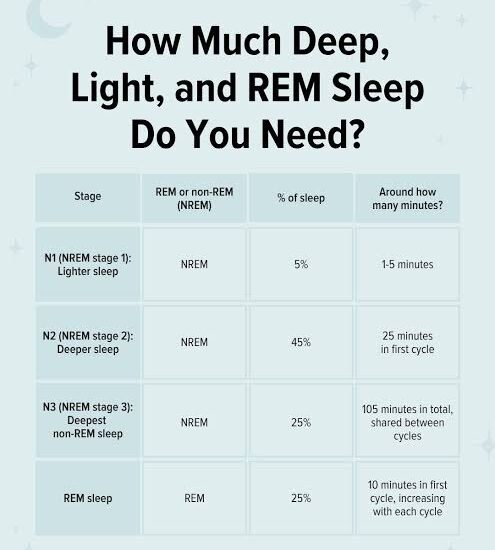
Getting enough sleep is important, but sleep quality matters too. During the night, your body moves through different stages of sleep, including deep sleep and rapid eye movement (REM) sleep.
Deep sleep is also called slow-wave sleep and represents stage 3 of non-REM sleep. According to the National Heart, Lung, and Blood Institute, people generally spend more deep sleep earlier in the night.
But how much deep sleep do you actually need?
What Is Deep Sleep?
Deep sleep is the stage of sleep during which your body enters a particularly restorative state. It is harder to wake someone during this stage compared with lighter sleep.
Sleep cycles repeat throughout the night. The NHLBI explains that a typical sleep cycle lasts around 80–100 minutes, with people usually experiencing four to six cycles during a night.
How Much Sleep Do Adults Need?
The amount of sleep needed depends on age.
For adults, current recommendations generally place healthy sleep around 7–9 hours per night.
There is no single exact number of deep-sleep minutes that everyone must achieve every night. Sleep architecture varies according to age and individual factors.
Rather than obsessing over a specific deep-sleep number from a wearable device, it is usually more useful to focus on getting sufficient, consistent, good-quality sleep.
Why Is Deep Sleep Important?
Quality sleep supports several aspects of health.
Sleep contributes to physical recovery and supports brain function. Adequate sleep is also associated with healthy regulation of appetite-related hormones and glucose metabolism.
Poor sleep over time can affect:
- Energy
- Concentration
- Mood
- Physical recovery
- Appetite
- Daily performance
How Can You Support Better Deep Sleep?
Keep a Consistent Sleep Schedule
Try going to bed and waking up at approximately the same times each day.
A regular schedule helps establish a predictable sleep routine.
Create a Comfortable Bedroom
Keep your bedroom comfortable, quiet, and dark. A cooler, comfortable sleeping environment may also make it easier to remain asleep.
Limit Stimulants Late in the Day
Caffeine can remain active in the body for hours. If you have difficulty falling asleep, consider avoiding caffeine later in the day.
Reduce Screen Exposure Before Bed
A relaxing wind-down routine may help your body transition toward sleep.
Try reading, gentle stretching, breathing exercises, or another quiet activity.
Exercise Regularly
Regular physical activity supports overall health and can contribute to better sleep. Avoid exercising so intensely or so close to bedtime that it makes it harder for you to settle down.
Why Do I Still Feel Tired After Sleeping?
If you regularly sleep for an adequate amount of time but still wake up exhausted, the issue may not simply be the number of hours you spend in bed.
Sleep disruptions, an inconsistent schedule, stress, medications, alcohol, or sleep disorders can affect sleep quality.
Persistent daytime sleepiness or loud snoring with breathing pauses should be discussed with a healthcare professional.
Final Thoughts
Deep sleep is an important part of the normal sleep cycle, but there is no universal deep-sleep target that everyone needs to hit every night.
Instead of focusing only on a sleep-tracker score, aim for consistent sleep, a regular schedule, healthy habits, and enough total sleep.
For adults, approximately 7–9 hours of sleep is generally recommended.