
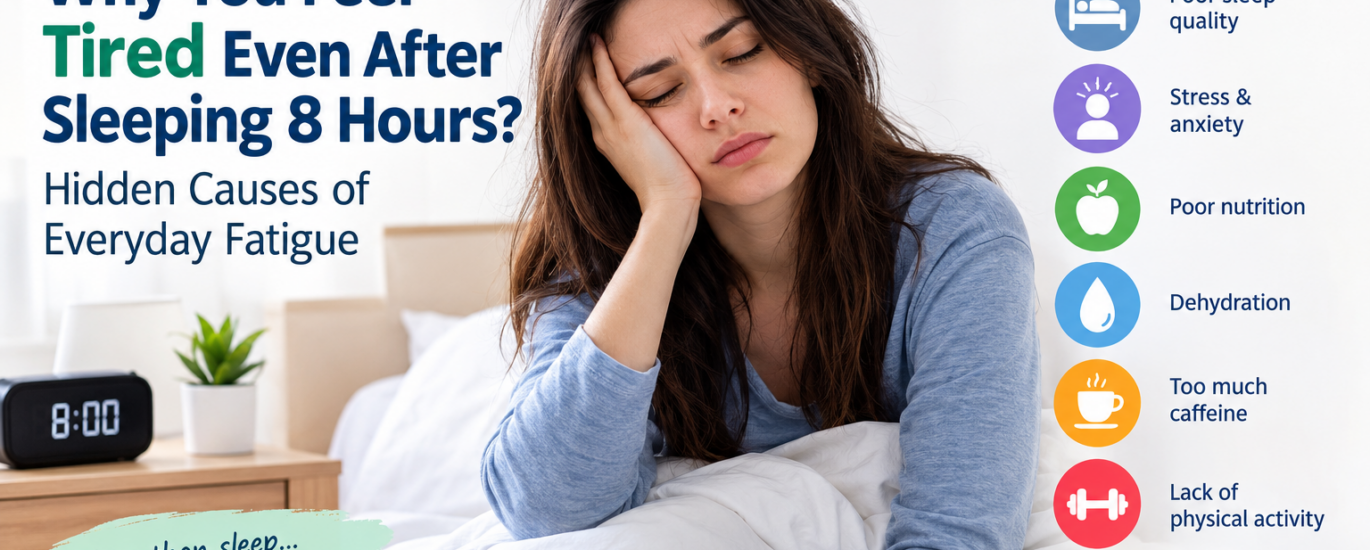
You went to bed on time, slept for nearly eight hours and expected to wake up refreshed. Instead, you opened your eyes feeling as though you could easily sleep for another three hours.
If this sounds familiar, you are not alone. Getting enough hours of sleep does not always mean getting good-quality, restorative sleep. Your sleep environment, stress levels, daily habits, nutrition, medications and even certain health conditions can influence how energetic you feel during the day.
Adults generally need around 7–9 hours of sleep, but the amount of sleep you need is only one part of the equation. How well you sleep and what is happening in your body also matter.
So, why are you still tired after eight hours of sleep? Let’s explore some commonly overlooked reasons.
1. Eight Hours of Sleep Doesn’t Always Mean Quality Sleep
Sleep isn’t simply about the number of hours you spend in bed.
You may sleep for eight hours but experience repeated brief awakenings that you don’t remember the next morning. Noise, light, an uncomfortable room temperature, stress or an irregular sleep schedule can interfere with your sleep.
For example, someone may technically spend eight hours in bed but wake several times during the night. The result can be waking up feeling unrefreshed and struggling to concentrate during the day.
A consistent sleep and wake schedule, a comfortable bedroom and a relaxing bedtime routine can help support better sleep.
2. Your Sleep Schedule May Be Working Against You
Going to bed at 10 p.m. one night and midnight the next can make it harder for your body to maintain a predictable rhythm.
Your body has an internal biological clock that helps regulate sleep and wakefulness. Constantly changing your bedtime, sleeping much later on weekends or working rotating shifts can make you feel tired even when you spend enough time sleeping.
Try to keep your bedtime and wake-up time reasonably consistent throughout the week.
3. Stress Can Leave You Exhausted
Stress doesn’t always disappear when you fall asleep.
If your mind remains active at bedtime, you may spend less time in restful sleep or wake up during the night. Persistent stress can also leave you mentally exhausted during the day.
You may notice symptoms such as:
- Difficulty concentrating
- Irritability
- Muscle tension
- Racing thoughts
- Trouble falling asleep
- Waking up feeling unrefreshed
Stress, anxiety and low mood are recognised contributors to sleep problems and tiredness.
Creating a wind-down period before bed may help. Reading, gentle stretching, breathing exercises or listening to relaxing music can be better choices than working or scrolling through stressful content immediately before sleeping.
4. Your Diet May Be Affecting Your Energy
Food provides the energy and nutrients your body needs to function. Irregular meals, highly processed foods or a diet lacking important nutrients may contribute to low energy.
Instead of relying heavily on sugary snacks or energy drinks, focus on balanced meals containing a combination of:
- Protein
- Whole grains
- Vegetables
- Fruits
- Healthy fats
- Fibre-rich foods
If fatigue persists despite a balanced diet and adequate sleep, don’t automatically assume you need supplements. Persistent tiredness may have an underlying cause that needs professional assessment.
5. You May Not Be Drinking Enough Fluids
Even mild dehydration can contribute to feelings of tiredness.
This can be particularly relevant during hot weather, exercise or periods when you are simply forgetting to drink enough fluids.
Keep water accessible throughout the day and pay attention to your body’s thirst signals. However, excessive water consumption isn’t necessary either; your fluid needs vary depending on factors such as activity, climate and health.
6. Too Much Caffeine Can Create a Tiredness Cycle
Coffee and tea can temporarily make you feel more alert. But caffeine consumed later in the day can interfere with your ability to sleep.
This can create a cycle:
Tired → caffeine → difficulty sleeping → poor-quality sleep → tired the next day → more caffeine
If you regularly struggle with sleep, consider limiting caffeine later in the day.
The NHS notes that caffeine can interfere with sleep and recommends avoiding it in the hours before bedtime if it is affecting your sleep.
7. Alcohol May Make You Sleepy but Not Well Rested
Alcohol can make some people fall asleep more quickly, but that doesn’t necessarily mean it improves sleep quality.
Drinking alcohol before bed can contribute to disrupted or less restorative sleep, potentially leaving you tired the following day.
If you regularly wake up tired, consider whether evening alcohol consumption could be contributing to the problem.
8. Your Bedroom Could Be the Problem
Your sleeping environment can have a surprisingly large impact on sleep quality.
Consider whether your bedroom is:
- Too bright
- Too noisy
- Too warm
- Too cold
- Uncomfortable
- Filled with digital distractions
A darker, quieter and comfortable bedroom can make it easier to maintain uninterrupted sleep.
You should also consider whether your phone is encouraging you to stay awake longer than planned.
9. Lack of Physical Activity Can Contribute to Low Energy
When you’re exhausted, exercise may seem like the last thing you want to do.
However, regular physical activity can support energy levels and sleep. You don’t necessarily need an intense workout. A walk, cycling, swimming, stretching or another activity you enjoy can be a useful starting point.
The NHS notes that regular exercise can help reduce tiredness over time and recommends gradually building physical activity into your routine.
10. Sleep Apnoea Could Be Interrupting Your Sleep
One of the more important reasons for feeling exhausted despite spending enough time in bed is sleep apnoea.
Sleep apnoea can cause breathing interruptions during sleep. Some people may snore loudly, gasp, choke or make snorting noises during the night. These interruptions can affect sleep quality and contribute to daytime tiredness.
You may not realise that your breathing is being interrupted because it happens while you’re asleep.
If a partner or family member tells you that you snore loudly or stop breathing during sleep, speak with a healthcare professional rather than simply assuming you’re a poor sleeper.
11. Iron Deficiency Can Cause Persistent Tiredness
Iron deficiency anaemia is another possible explanation for ongoing fatigue.
The body needs iron to produce haemoglobin, which helps transport oxygen around the body. When iron deficiency anaemia develops, symptoms can include tiredness, shortness of breath, pale skin and noticeable heartbeats.
Rather than taking iron supplements without knowing whether you need them, talk to a healthcare professional if persistent fatigue is accompanied by symptoms that concern you.
A blood test may be recommended depending on your symptoms and medical history.
12. Thyroid Problems May Affect Energy Levels
Your thyroid helps regulate several important body processes.
An overactive thyroid can be associated with tiredness alongside symptoms such as nervousness, irritability, muscle weakness and difficulty staying still. Other thyroid disorders can also cause fatigue.
If tiredness continues for weeks or is accompanied by unexplained changes in weight, mood, heart rate or other symptoms, medical evaluation can help identify the underlying cause.
13. Blood Sugar Problems Can Sometimes Cause Fatigue
Persistent tiredness can sometimes occur alongside blood sugar problems.
For example, the NHS lists increased thirst, frequent urination, weight loss and significant tiredness among symptoms that can occur with diabetes.
Fatigue by itself doesn’t mean you have diabetes. However, if tiredness occurs alongside other unexplained symptoms, it is worth discussing with a healthcare professional.
14. Some Medicines Can Make You Feel Sleepy
If your tiredness started after beginning a new medicine, don’t ignore the timing.
Some medicines can cause drowsiness or contribute to sleep problems. This can include certain medicines used for allergies, pain, mental health conditions and other health problems.
Never stop a prescribed medicine simply because you feel tired. Instead, speak with your doctor or pharmacist about possible side effects and alternatives.
15. Mental Exhaustion Can Feel Like Physical Exhaustion
Not all fatigue starts in the body.
Long periods of work pressure, emotional stress, anxiety or low mood can leave you feeling physically drained. You may sleep for eight hours but still wake up feeling as though your mental battery has not recharged.
Fatigue can also make concentration and everyday tasks feel harder.
If persistent tiredness is accompanied by significant changes in mood, motivation or interest in activities you normally enjoy, consider discussing it with a healthcare professional.
16. Sometimes the Cause Is More Than One Thing
One of the biggest mistakes people make is looking for a single explanation.
Your tiredness could be influenced by several factors at once:
Poor sleep + stress + little exercise + irregular meals = persistent fatigue
For example, someone may stay up late using their phone, drink several coffees the following day, skip breakfast, sit at a desk for eight hours and then feel too tired to exercise.
Changing one habit may help, but addressing the whole pattern can be more effective.
How to Feel More Energetic During the Day
If your tiredness isn’t caused by an underlying medical condition, several basic habits may help.
Keep a Consistent Sleep Schedule
Try to go to bed and wake up at similar times each day.
Create a Relaxing Bedtime Routine
Give yourself time to wind down rather than moving directly from work or stressful activities to bed.
Eat Regular, Balanced Meals
Prioritise nutrient-dense foods and avoid relying on sugary snacks for quick energy.
Stay Hydrated
Keep water nearby and drink regularly throughout the day.
Move Your Body
Start with manageable activities such as walking and gradually increase your activity level.
Limit Late-Day Caffeine
If caffeine affects your sleep, reduce your intake later in the day.
Review Your Sleep Environment
Keep your bedroom comfortable, dark and quiet where possible.
Pay Attention to Patterns
Keep a simple fatigue diary for a week. Record your bedtime, wake time, meals, caffeine, exercise, stress and how energetic you feel.
Patterns can sometimes reveal habits that you hadn’t noticed.
When Should You See a Doctor About Fatigue?
Occasional tiredness is normal. Persistent or unexplained fatigue deserves more attention.
Consider speaking with a healthcare professional if:
- You have been tired for several weeks without knowing why.
- Fatigue is interfering with work, school or daily activities.
- You regularly fall asleep during the day.
- You wake up gasping, choking or struggling to breathe.
- You have unexplained weight loss.
- You experience significant changes in mood.
- You have shortness of breath or noticeable heart palpitations.
- Your tiredness is becoming progressively worse.
The NHS advises seeking medical advice when tiredness persists for weeks without an obvious explanation, affects daily life or occurs alongside other concerning symptoms.
The Bottom Line
Feeling tired after eight hours of sleep doesn’t necessarily mean you need more sleep.
The quality and consistency of your sleep, stress, diet, hydration, physical activity and daily habits can all influence your energy. In some cases, persistent fatigue may also be linked to conditions such as sleep apnoea, anaemia, thyroid problems or diabetes.
The key is not to automatically treat tiredness with more coffee or supplements. Instead, look at your overall routine and pay attention to persistent or unusual symptoms.
If your fatigue continues despite making reasonable lifestyle improvements, getting professional medical advice can help determine whether there is an underlying cause.
Your body doesn’t always need more hours in bed. Sometimes, it needs better sleep, better habits—or a closer look at what’s causing the fatigue.
Frequently Asked Questions
Why am I tired after sleeping for 8 hours?
You may feel tired after eight hours because sleep quality matters as much as sleep duration. Stress, irregular sleep schedules, caffeine, alcohol, sleep disorders and certain health conditions can contribute to feeling unrefreshed.
Is 8 hours of sleep enough for adults?
Many adults need around 7–9 hours of sleep, although individual needs vary. If you regularly wake up tired despite getting enough sleep, the quality of your sleep and other possible causes should be considered.
Can dehydration make you feel tired?
Yes. Mild dehydration can contribute to tiredness. Maintaining adequate fluid intake throughout the day is one simple habit that may support energy levels.
Can stress cause fatigue even if I sleep enough?
Yes. Stress can contribute to sleep difficulties and daytime tiredness. Persistent stress may make it difficult to relax at night and can leave you mentally exhausted during the day.
When is tiredness a sign of a health problem?
Tiredness may warrant medical evaluation when it persists for several weeks, interferes with daily life or occurs alongside symptoms such as unexplained weight loss, shortness of breath, heart palpitations, significant mood changes or abnormal breathing during sleep.
Can exercise help reduce tiredness?
Regular physical activity can help improve energy over time. You don’t need to begin with strenuous exercise; even manageable activities such as walking can be a useful starting point.
Could sleep apnoea be making me tired?
Yes. Sleep apnoea can interrupt normal sleep and contribute to daytime tiredness. Loud snoring, gasping, choking or interrupted breathing during sleep are signs that should be discussed with a healthcare professional.



3 thoughts on “Why You Feel Tired Even After Sleeping 8 Hours: Hidden Causes of Everyday Fatigue”