Exfoliation is often promoted as one of the easiest ways to achieve smoother, brighter-looking skin. Scrubs, exfoliating acids, toners, peels and retinoid-based products are widely used to remove dead skin cells and improve skin texture.
But there can be too much of a good thing.
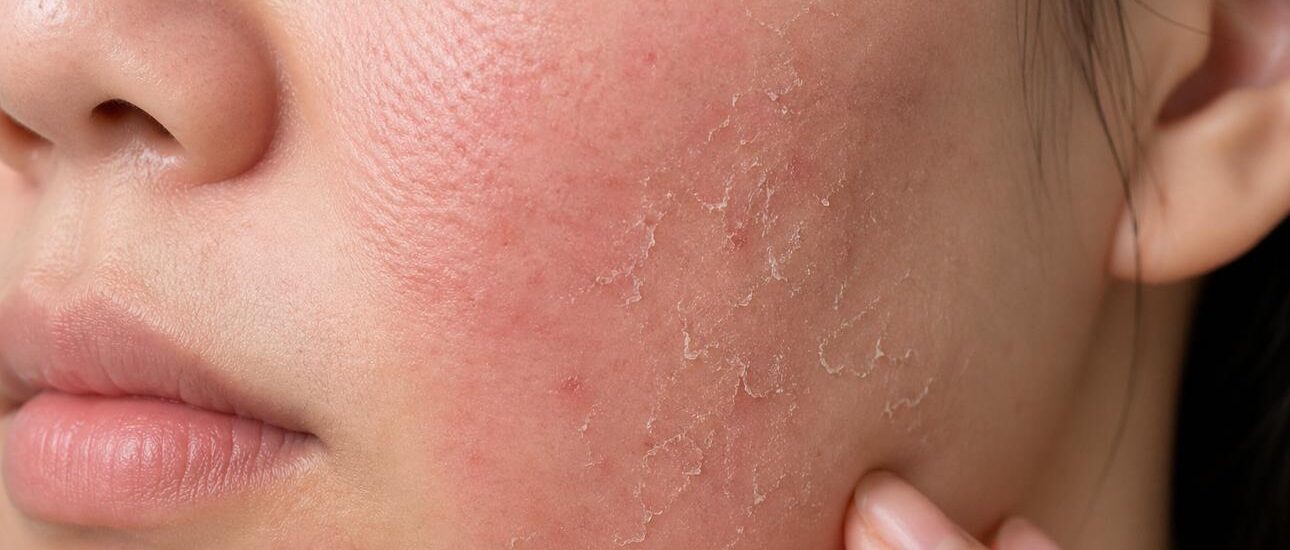
If you exfoliate too frequently or combine several strong products, your skin may become irritated instead of healthier. You might notice burning, tightness, redness, unusual dryness or increased sensitivity to products that previously felt comfortable.
One possible reason is disruption of the skin barrier.
Your skin barrier is more than a beauty buzzword. It is an important part of the outermost layer of your skin and helps reduce water loss while protecting the body from external irritants.
Understanding how over-exfoliation affects this barrier can help you build a more balanced skincare routine.
What Is the Skin Barrier?
The outermost layer of the skin is called the stratum corneum. It contains skin cells surrounded by lipids, including ceramides, cholesterol and fatty acids.
A simplified way to imagine it is like a protective wall:
- Skin cells act like building blocks.
- Lipids help fill the spaces between them.
- The overall structure helps maintain the skin’s protective function.
When this barrier is disrupted, the skin can lose moisture more easily and become more reactive.
What Does Exfoliation Actually Do?
Exfoliation removes dead skin cells from the surface of the skin.
There are two broad categories:
Physical exfoliation
This involves manually loosening dead skin cells using products or tools such as:
- Face scrubs
- Exfoliating brushes
- Washcloths
- Certain cleansing tools
Chemical exfoliation
Chemical exfoliants use ingredients that help loosen or remove dead skin cells.
Common examples include:
- Alpha hydroxy acids (AHAs)
- Beta hydroxy acids (BHAs)
- Polyhydroxy acids (PHAs)
Products containing these ingredients can be useful for particular skin concerns, but stronger or more frequent use isn’t automatically better.
How Does Over-Exfoliation Happen?
Over-exfoliation doesn’t always happen because someone uses one extremely strong product.
It can happen because several products are combined.
For example, someone might use:
Morning: exfoliating toner + vitamin C
Evening: AHA serum + retinoid
Weekend: physical face scrub
Each product may seem reasonable individually. Together, however, the routine can become irritating for some people.
Another common mistake is increasing the frequency because the skin initially appears smoother.
The result can be a cycle in which irritation leads to more products, which leads to more irritation.
Signs That You May Be Over-Exfoliating
Your skin can give you clues that your routine has become too aggressive.
1. Persistent Tightness
Skin that constantly feels tight after cleansing may be experiencing excessive dryness or irritation.
A temporary feeling of cleanliness is different from skin that remains uncomfortable throughout the day.
2. Burning or Stinging
If your normal moisturizer suddenly stings when applied, that’s worth paying attention to.
Products that previously felt comfortable may become irritating when the skin barrier is compromised.
3. Increased Redness
Persistent redness can indicate irritation.
If your face becomes noticeably red after using an exfoliating product, continuing to increase the frequency may make the problem worse.
4. Flaking and Peeling
Visible peeling isn’t necessarily proof that a skincare product is working effectively.
Excessive dryness and peeling can be signs that the skin is irritated.
5. Increased Sensitivity
You may suddenly find that products you previously tolerated cause discomfort.
Even water or a gentle cleanser may feel uncomfortable when the skin is significantly irritated.
6. Rough or Uncomfortable Texture
Ironically, excessive exfoliation can make skin feel rougher.
Instead of the smooth texture you expected, you may notice dryness, uneven patches or tiny areas of irritation.
Can Over-Exfoliation Cause Breakouts?
It can be complicated.
People sometimes respond to breakouts by adding more acids, scrubs and cleansing products. However, repeatedly irritating the skin can make it increasingly uncomfortable and dry.
Not every breakout is caused by over-exfoliation, and acne has many potential contributing factors.
If acne is persistent, painful or leaving scars, it’s better to consult a dermatologist rather than repeatedly adding stronger exfoliating products.
For broader information about maintaining healthy everyday habits, visit My Medi Times – Health is Wealth.
What Should You Do If Your Skin Barrier Feels Damaged?
The first step is usually to simplify your routine.
Instead of adding another active ingredient, consider temporarily reducing potentially irritating products.
A basic routine may include:
Gentle cleansing
Use a mild cleanser appropriate for your skin type.
Avoid aggressive scrubbing.
Moisturizing
A moisturizer can help support the skin’s hydration and comfort.
Look for products formulated for your skin type rather than choosing products solely because they contain many active ingredients.
Sun protection
Daily sun protection is an important part of skin care.
Temporarily reduce exfoliation
If exfoliating products appear to be causing irritation, giving your skin a break can be sensible.
You don’t need to keep exfoliating simply because a product is marketed for daily use.
What Are Ceramides and Why Are They Used in Moisturizers?
Ceramides are naturally occurring lipids found in the skin.
They are important components of the skin barrier and are commonly included in moisturizers designed for dry or sensitive skin.
A moisturizer containing ceramides may be useful for people dealing with dryness, although the best product depends on the individual’s skin condition.
Is More Exfoliation Better?
No.
The ideal frequency depends on:
- Skin type
- Product strength
- Other active ingredients
- Existing skin conditions
- Individual sensitivity
- Environmental conditions
Someone with resilient, oily skin may tolerate an exfoliating product differently from someone with dry or sensitive skin.
There is no universal exfoliation schedule that works for everyone.
What About Physical Scrubs?
Physical exfoliation isn’t automatically bad.
The problem is often how aggressively and how frequently it is performed.
Harsh scrubbing can irritate the skin, particularly when combined with other exfoliating products.
If you use a physical exfoliant, avoid vigorous rubbing and pay attention to how your skin responds afterward.
If your skin becomes red, sore or unusually sensitive, continuing to scrub harder isn’t the solution.
Should You Stop All Skincare Products?
Not necessarily.
The goal isn’t to eliminate every skincare product.
Instead, focus on identifying products that may be contributing to irritation.
A simplified routine can be easier to manage:
Cleanse → Moisturize → Protect from the sun
Once your skin feels comfortable again, individual products can be gradually reconsidered.
If a particular active ingredient repeatedly causes irritation, a dermatologist can help determine whether it is appropriate for your skin.
Beauty Doesn’t Always Mean More Products
Modern skincare routines can contain dozens of products.
Serums, masks, exfoliants, toners, essences, oils and treatments can all have a place in beauty routines, but using more products doesn’t necessarily mean achieving better skin.
A complicated routine can also make it difficult to identify what is causing irritation.
A simpler approach has another advantage: you know what you’re putting on your skin.
This can be especially useful when your skin suddenly becomes dry, red or sensitive.
When Should You See a Dermatologist?
Mild irritation may improve after removing the suspected trigger and simplifying your routine.
However, consider seeing a dermatologist if you experience:
- Persistent redness
- Significant swelling
- Painful skin
- Severe burning
- Crusting or oozing
- Persistent peeling
- Recurrent rashes
- Acne that is worsening
- Symptoms that don’t improve after simplifying your routine
A dermatologist can determine whether the problem is simple irritation or another skin condition requiring treatment.
A Simple Skin-Barrier-Friendly Routine
If your goal is healthy-looking skin rather than an overloaded routine, consider this basic structure:
Morning
1. Gentle cleanser
Remove overnight oil and impurities without aggressive scrubbing.
2. Moisturizer
Choose one appropriate for your skin type.
3. Sunscreen
Apply broad-spectrum SPF 30 or higher as recommended by dermatology organizations. American Academy of Dermatology – Sunscreen
Evening
1. Gentle cleansing
2. Moisturizer
3. Targeted treatment, if appropriate
If you use an exfoliating acid or retinoid, introduce it according to professional advice and your skin’s tolerance rather than automatically using multiple active products every day.
The Bottom Line
Exfoliation can be useful in a skincare routine, but more isn’t always better.
If your skin has become unusually dry, tight, red, flaky or sensitive, your routine may be doing more than your skin can comfortably handle.
The skin barrier needs time and support to maintain its protective function. Simplifying your routine, using a gentle cleanser, moisturizing regularly and protecting your skin from the sun can help create a more balanced approach to skincare.
And perhaps the most useful beauty lesson is this:
Healthy skin doesn’t always need more products. Sometimes it needs less.
Frequently Asked Questions
1. How do I know if I am over-exfoliating?
Common warning signs include persistent dryness, tightness, burning, redness, peeling and increased sensitivity. These symptoms can have other causes too, so persistent problems should be assessed by a dermatologist.
2. Can over-exfoliation damage the skin barrier?
Excessive or aggressive exfoliation can irritate the skin and interfere with its protective barrier, particularly when multiple irritating products are combined.
3. How long should I stop exfoliating if my skin is irritated?
There isn’t one appropriate timeframe for everyone. If your skin is irritated, simplifying your routine until it becomes comfortable again may be appropriate. Significant or persistent irritation should be evaluated professionally.
4. Can I use moisturizer after exfoliating?
Yes. Moisturizing is commonly used as part of skincare after cleansing and exfoliation. Choose a moisturizer appropriate for your skin type and avoid products that cause burning or irritation.
5. Is peeling skin a sign that an exfoliant is working?
Not necessarily. Visible peeling can indicate irritation or excessive dryness rather than successful exfoliation.
6. Are chemical exfoliants better than scrubs?
Neither is universally better. AHAs, BHAs, PHAs and physical exfoliants work differently, and suitability depends on your skin and the specific product.
7. Can sunscreen help protect an irritated skin barrier?
Sunscreen protects against ultraviolet radiation and is an important part of everyday skin care. A broad-spectrum SPF 30 or higher is commonly recommended by dermatology organizations.