
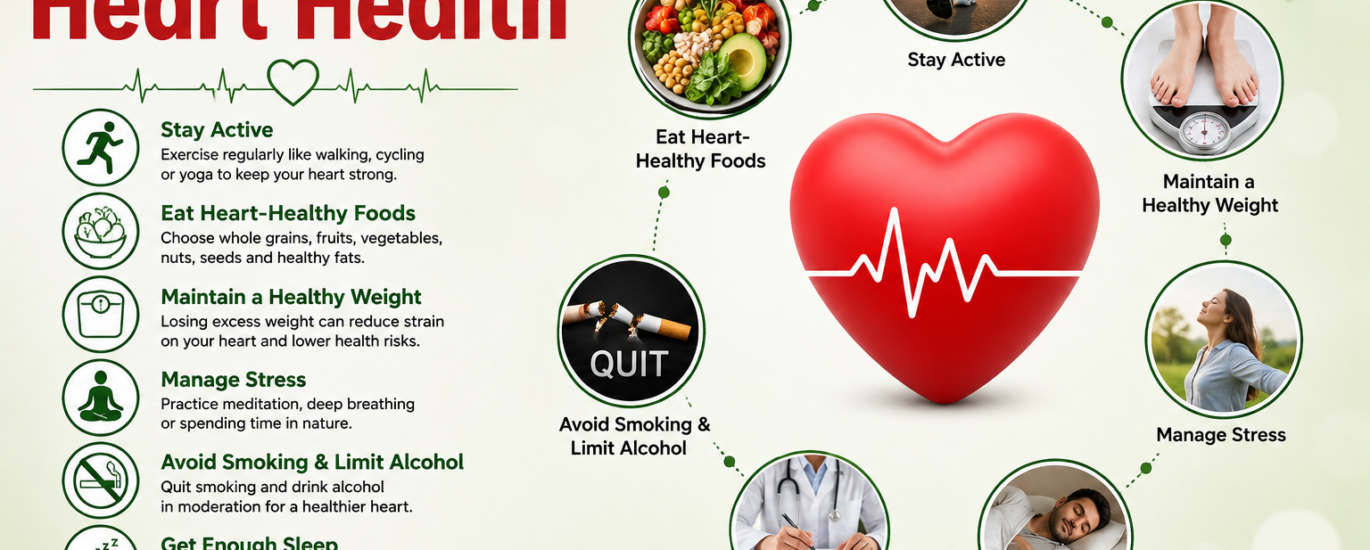
Good heart health is a crucial aspect of total wellness. The heart is always pumping blood and oxygen through the body, thus taking care of your heart should be a daily routine. Fortunately, promoting cardiovascular health doesn’t often mean making complicated changes. Small changes to food, physical activity, sleep, stress management and everyday habits can make a big difference over time.
Modern life can be hard on your heart health. Unhealthy lifestyle might be due to sitting for long hours, excessively processed foods, no exercise, bad sleeping and persistent stress. Developing healthier habits early can assist support the heart and improve quality of life overall.
Here are 10 practical methods to make heart-smart choices every day.
1. Get some physical activity
Regular physical activity is one of the most important habits to preserve cardiovascular health. Exercise can assist enhance your fitness, support good circulation and help you maintain a healthy body weight.
You don’t need to pay for an expensive gym membership. There are several ways to keep active including walking, cycling, swimming, dancing and simple activities at home.
If you haven’t been active for a long time, start slowly. Even a brief walk each day can be a wonderful start. As you get fitter you can steadily increase the length and intensity of your exercises.
2. Eat More Heart-Healthy Foods
Cardiovascular wellness can be improved with a well-rounded diet. Fill your plate with plenty of veggies, fruits, whole grains, beans, lentils, nuts and seeds.
Foods that provide fibre might be particularly important as part of a balanced eating routine. Rather than reaching for high-processed snacks, choose healthier options like fresh fruit, unsalted almonds or yoghurt.
It also helps to pay attention to how the items are cooked. Eating deep-fried foods often is less ideal than cooking with healthy oils in moderation, such as grilling, baking, steaming.
3. Cut Down on Excess Salt
Consuming too much sodium might lead to higher blood pressure in certain people. Many packaged and processed foods include large quantities of salt, so checking food labels can be a good practice.
Try herbs and spices, garlic and other tasty items, lemon juice instead of instinctively adding extra salt to meals.
Choosing fresh ingredients and reducing the use of salty processed foods will help you maintain a healthy diet.
4. Keep a Healthy Weight
Keeping your weight in check might help your heart and make it easier to do physical activities every day.
Instead of severe diets, a better approach is to make durable lifestyle modifications. Eating balanced meals, managing quantities and being physically active are often more feasible approaches for long-term health.
Weight objectives are not the same for all. If you have a current health condition or are concerned about your weight, a skilled healthcare professional can assist you find an appropriate method.
5. Get Plenty of Quality Sleep
When people think about heart health, sleep doesn’t always come to mind. But getting adequate sleep is a crucial aspect of a healthy lifestyle.
Most adults do OK with a regular sleep schedule and a calming nighttime routine. Try to go to bed and get up at the same time every day and get rid of distractions before going to bed.
If you have persistent severe sleep issues, extreme daytime exhaustion or other worrying symptoms, talk to your healthcare professional.
6. Cope with everyday stress
A little stress every now and again is natural, but chronic stress can make it tougher to stick to healthy practices.
Simple things like taking a walk outside, doing relaxation techniques, spending time with friends and family, doing a hobby or taking brief breaks during a busy day will help you cope with stress in your day to day life.
Easier to stick with stress-management techniques if you find something you really enjoy doing.
7. Cigaret smoking
Smoking is one of the most critical lifestyle variables to tackle for cardiovascular health. In tobacco smoke, there are chemicals that can harm blood vessels and negatively influence the cardiovascular system.
If you smoke, quitting is one of the most important things you can do for your overall health.
Those wanting to quit should talk to a health care provider about evidence-based support and techniques that may help enhance their odds of effectively quitting.
8. Reduce Alcohol
Drinking alcohol can harm health in a number of ways – particularly if drunk in excess. If you drink alcohol, do it in moderation. If you do not drink, do not feel forced to start drinking for your health.
What is appropriate may depend on your unique circumstances, medications and health issues. If you’re unsure, talk to your doctor about drinking alcohol.
9. Stay Active Throughout the Day
A scheduled workout is good, but so is moving regularly throughout the day.
If you are at a desk for hours on end, take small mobility breaks throughout the day. If you can, use the stairs, walk around on the phone or do minor stretches in between jobs.
Getting up regularly after long periods of sitting is a good way to be more active without having to make a big change to your schedule.
10. Know Your Important Health Numbers
Taking care of your heart also involves knowing crucial health measures.
Depending on your age and your unique risk factors, your health care provider may suggest that you get your blood pressure, cholesterol, blood glucose and other measures checked.
It can help detect such problems early by getting regular health screenings. If the result is beyond the suggested range your healthcare provider can explain what this means and whether lifestyle adjustments, monitoring or therapy may be needed.
Small Habits That Can Make a Difference
You don’t have to improve your heart health overnight. Trying to change it all at once can make it hard to keep up with good behaviours.
Pick one or two reasonable adjustments instead. For example, you might start with a 20-minute daily walk, add a serving of vegetables to your meals or set a regular bedtime.
When one habit has become part of your routine, add another beneficial modification.
The goal is not to be perfect. It’s generally better to be consistent than to make major adjustments that are hard to maintain.
A Simple Daily Routine for a Healthy Heart
A simple day may look like:
- Breakfast to start the morning off well balanced
- Drinking sufficient water during the day
- Regular physical activity, such as walking
- Opting for vegetables, fruits and whole grains more often
- Reduce your intake of processed and salty meals
- taking small breaks from long periods of sitting
- Practicing stress management strategies
- Consistent sleeping schedule
These activities can help maintain cardiovascular health and promote an overall healthy lifestyle.
When Should You See a Doctor?
Lifestyle behaviours are vital, but they can’t substitute medical care.
If you have any of the following signs of an allergic reaction, get emergency medical attention: hives; difficulty breathing; swelling of the face, lips, tongue, or throat.
If you have pre-existing cardiovascular diseases, diabetes, high blood pressure, high cholesterol or other medical concerns, please consult with your healthcare expert before making significant changes to diet or activity.
Conclusion
There are many daily choices that impact heart health. You can improve your lifestyle by exercising regularly, eating nutritious foods, getting appropriate sleep, managing stress, not using tobacco and monitoring critical health metrics.
The best adjustments are usually simple changes you can maintain over the long run. Start today and take it one step at a time. Make better behaviours part of your daily life.
Read the latest articles on MyMediTimes – Health is Wealth for practical knowledge on health, nutrition, fitness and wellness.



One thought on “10 Easy Natural Methods to Improve Your Heart Health”