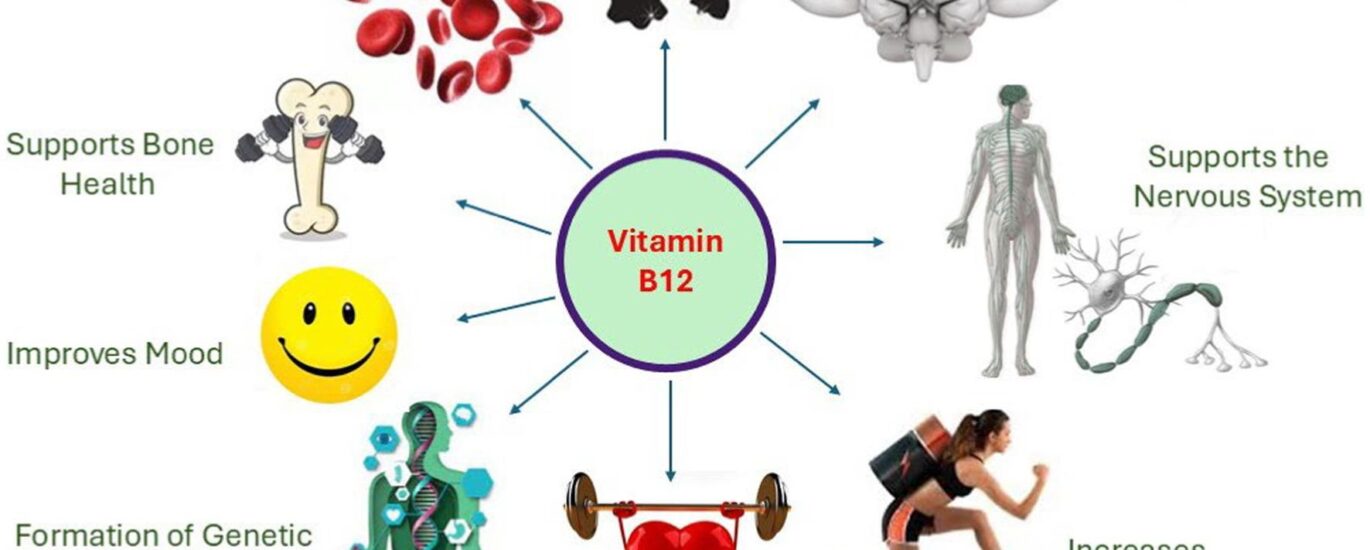
Vitamin B12 deficiency is a common nutritional problem that can affect the blood, nerves, energy levels and overall wellbeing. Vitamin B12 plays an important role in producing healthy red blood cells, maintaining nerve cells and making DNA. Adults generally need about 2.4 mcg of vitamin B12 per day.
Although vitamin B12 is required in relatively small amounts, inadequate intake or poor absorption can eventually lead to deficiency. Symptoms may develop gradually and can include tiredness, weakness, numbness, tingling, balance problems, memory difficulties and anaemia.
Understanding the symptoms, causes, treatment and prevention of vitamin B12 deficiency can help people recognise the problem early and seek appropriate medical advice.
What Is Vitamin B12?
Vitamin B12, also known as cobalamin, is a water-soluble vitamin that is essential for several important processes in the body. It supports normal nerve function, helps form red blood cells and contributes to DNA production.
The body can store substantial amounts of vitamin B12, which means deficiency symptoms may take years to appear after intake or absorption becomes inadequate.
Vitamin B12 is naturally found mainly in animal-derived foods such as:
- Fish
- Meat
- Poultry
- Eggs
- Milk and other dairy products
Some breakfast cereals, nutritional yeast products and other foods may also be fortified with vitamin B12.
Vitamin B12 Deficiency Symptoms
The symptoms of vitamin B12 deficiency can vary from person to person. Some people initially experience general symptoms such as tiredness, while others may develop neurological problems.
1. Persistent Tiredness and Weakness
One of the most common symptoms is feeling unusually tired or weak. Vitamin B12 deficiency can contribute to megaloblastic anaemia, which affects the body’s ability to produce healthy red blood cells.
2. Numbness and Tingling
A deficiency can affect the nervous system. Some people experience pins and needles, numbness or tingling, particularly in the hands and feet.
3. Pale Skin
Pale skin may occur when vitamin B12 deficiency causes anaemia. People with significant deficiency may also experience heart palpitations or shortness of breath.
4. Balance Problems
More advanced deficiency can affect nerve function and may contribute to difficulty maintaining balance or walking normally.
5. Memory and Concentration Problems
Vitamin B12 deficiency may be associated with confusion, poor memory and other cognitive symptoms.
6. Sore Mouth or Tongue
Some people develop a sore mouth or tongue as well as other oral symptoms.
7. Loss of Appetite and Weight Loss
Reduced appetite and unexplained weight loss can occur in people with vitamin B12 deficiency.
Because some neurological effects can become serious, suspected deficiency should be evaluated by a healthcare professional rather than ignored.
What Causes Vitamin B12 Deficiency?
Vitamin B12 deficiency can result from either insufficient intake or problems absorbing the vitamin.
Following a Vegetarian or Vegan Diet
Vitamin B12 occurs naturally in animal foods. People who consume little or no animal products may therefore be at greater risk unless they regularly consume fortified foods or appropriate supplements.
Poor Vitamin B12 Absorption
The body needs stomach acid and a protein called intrinsic factor to absorb vitamin B12 from food. Certain digestive conditions can interfere with this process.
Pernicious Anaemia
Pernicious anaemia is an autoimmune condition in which the body cannot produce sufficient intrinsic factor. This can make it difficult to absorb vitamin B12.
Digestive Disorders
Conditions affecting the stomach or small intestine, including coeliac disease and Crohn’s disease, may interfere with vitamin B12 absorption.
Certain Stomach or Intestinal Surgeries
Some surgeries involving the stomach or intestine can reduce the body’s ability to absorb vitamin B12.
Age
Older adults may have reduced stomach acidity, which can make it more difficult to absorb naturally occurring vitamin B12 from food. The NIH recommends that people over 50 obtain vitamin B12 primarily from fortified foods or supplements because absorption from natural food sources may be reduced.
Foods Rich in Vitamin B12
A balanced diet can help many people meet their vitamin B12 requirements.
Good sources include:
- Salmon and other fish
- Beef and other meats
- Chicken and poultry
- Eggs
- Milk
- Yoghurt
- Cheese
- Fortified breakfast cereals
- Vitamin B12-fortified nutritional yeast
For people following a vegan diet, fortified foods and vitamin B12 supplements can be important sources of the nutrient.
How Is Vitamin B12 Deficiency Diagnosed?
If you have symptoms that could indicate vitamin B12 deficiency, a healthcare professional may evaluate your medical history, diet, symptoms and medications and may recommend blood tests.
Testing can help determine whether vitamin B12 levels are low and whether anaemia or other abnormalities are present.
It is important not to assume that tiredness or numbness is automatically caused by vitamin B12 deficiency because many other conditions can produce similar symptoms.
Vitamin B12 Deficiency Treatment
Treatment depends on the underlying cause and the severity of the deficiency.
Vitamin B12 Supplements
Some people can correct a deficiency with oral vitamin B12 supplements. The appropriate dose and duration depend on the individual’s circumstances and should be discussed with a healthcare professional.
Vitamin B12 Injections
Vitamin B12 injections may be recommended when absorption is significantly impaired or when a healthcare professional considers injections appropriate. They can deliver vitamin B12 without relying on normal intestinal absorption.
People with pernicious anaemia are commonly treated with vitamin B12 injections, although high-dose oral vitamin B12 may be effective for some individuals.
Treating the Underlying Cause
If deficiency is caused by an absorption problem, digestive disorder, medication or another medical issue, treating the underlying cause is an important part of long-term management.
How to Prevent Vitamin B12 Deficiency
Prevention starts with understanding your nutritional needs and any factors that could interfere with absorption.
Eat Vitamin B12-Rich Foods
Include appropriate sources of vitamin B12 in your regular diet, such as fish, meat, eggs and dairy products.
Consider Fortified Foods
Fortified cereals and other foods can provide vitamin B12, particularly for people who eat little or no animal food.
Pay Attention to Diet Restrictions
Vegans and strict vegetarians should plan their diets carefully to ensure adequate vitamin B12 intake through fortified foods or supplements when appropriate.
Discuss Risk Factors With Your Doctor
People with digestive disorders, previous gastrointestinal surgery, pernicious anaemia or other risk factors may need monitoring or supplementation.
Vitamin B12 Daily Requirement
According to the U.S. National Institutes of Health, the recommended amount for most adults is 2.4 mcg per day. Requirements are slightly higher during pregnancy and breastfeeding.
However, the amount a person needs from supplements can differ from the daily nutritional requirement, particularly when absorption is poor. Supplement dosage should therefore be discussed with a qualified healthcare professional when treating an established deficiency.
When Should You See a Doctor?
You should consider speaking with a healthcare professional if you experience persistent:
- Unexplained fatigue
- Weakness
- Numbness or tingling
- Balance difficulties
- Memory or concentration problems
- Pale skin
- Loss of appetite
- Unexplained weight loss
- Mouth or tongue soreness
Neurological symptoms deserve particular attention because prolonged vitamin B12 deficiency can damage the nervous system, even when significant anaemia is not present.
Frequently Asked Questions About Vitamin B12 Deficiency
What are the first signs of vitamin B12 deficiency?
Early symptoms can include tiredness, weakness, loss of appetite and pale skin. Numbness or tingling may also develop when the nervous system is affected.
Can vitamin B12 deficiency cause tiredness?
Yes. Vitamin B12 deficiency can cause megaloblastic anaemia, which may result in tiredness and weakness.
Can vegetarians become vitamin B12 deficient?
Yes. Because natural vitamin B12 is found mainly in animal foods, vegetarians and especially vegans need to obtain B12 from fortified foods or supplements when necessary.
Is vitamin B12 deficiency treatable?
Yes. Treatment may involve oral supplements or vitamin B12 injections, depending on the cause and severity of deficiency.
How much vitamin B12 do adults need?
Most adults need approximately 2.4 mcg of vitamin B12 daily.
Can vitamin B12 deficiency affect the nerves?
Yes. Vitamin B12 deficiency can cause neurological symptoms such as numbness, tingling, balance problems and cognitive difficulties. Prolonged deficiency can damage the nervous system.
Can older adults be at greater risk?
Yes. Reduced stomach acidity and certain digestive problems can make vitamin B12 absorption more difficult with age.
Final Thoughts
Vitamin B12 is essential for healthy blood cells, normal nerve function and DNA production. Although the body stores vitamin B12 for a long time, inadequate intake or poor absorption can eventually lead to deficiency.
Recognising symptoms such as persistent fatigue, weakness, numbness, tingling and balance problems can encourage earlier medical evaluation. A healthcare professional can determine whether vitamin B12 deficiency is responsible and recommend appropriate treatment.