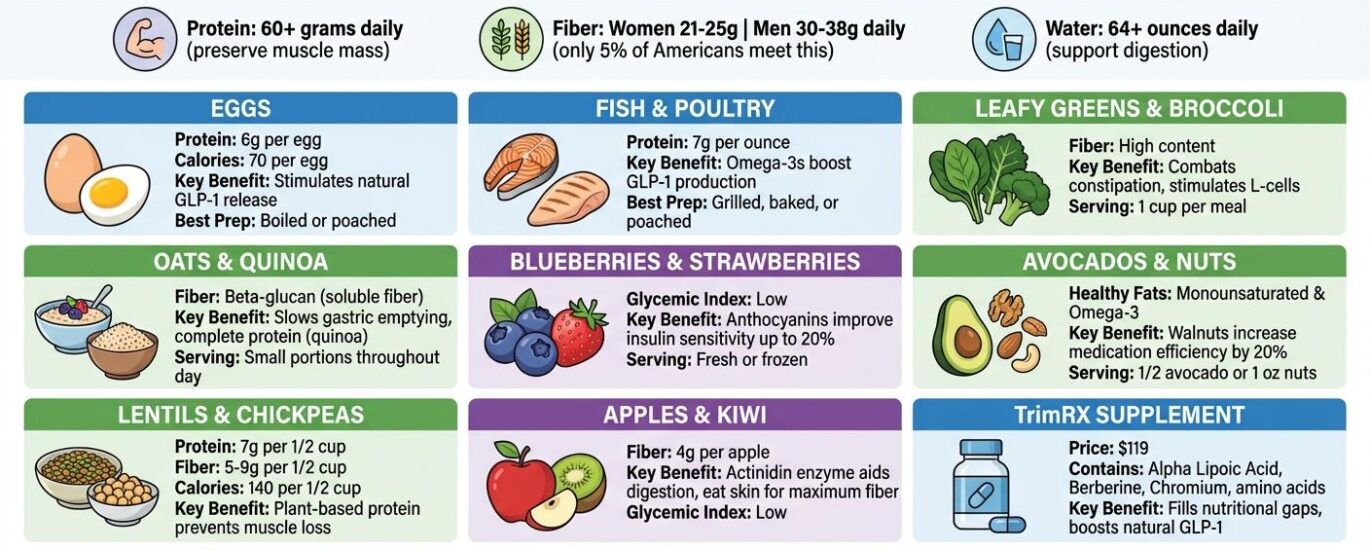
GLP-1 medications can help manage blood sugar and support weight loss by reducing appetite and slowing digestion. Because some people eat less while taking these medications, it can sometimes become more difficult to get enough essential vitamins and minerals from food.
This makes nutrition an important part of GLP-1 treatment. However, taking a large number of supplements is not automatically necessary. The right vitamins depend on your diet, health history, medications, and whether you have an identified nutritional deficiency.
Why Vitamins May Matter While Taking GLP-1
GLP-1 medications can reduce appetite, which may lead to smaller meals and lower overall food intake. If your diet becomes too limited, you may not get enough of certain nutrients.
A balanced diet should remain the foundation of nutrition during treatment. Nutrients that may require attention include vitamin D, vitamin B12, vitamin C, vitamin B1, calcium, magnesium, iron, and zinc.
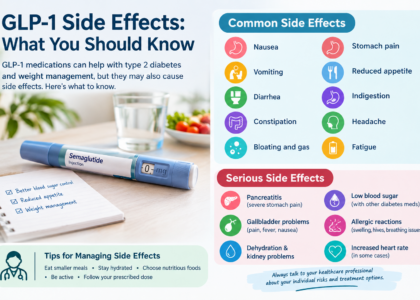
If you are experiencing digestive symptoms while taking GLP-1 medication, read our guide to GLP-1 side effects and how to manage them.
1. Vitamin D
Vitamin D is important for healthy bones, muscles, and normal immune function. Some people have low vitamin D levels even without taking GLP-1 medication.
Food sources include:
- Fatty fish
- Egg yolks
- Fortified milk
- Fortified plant-based beverages
- Some fortified cereals
If you have a vitamin D deficiency, your healthcare professional may recommend a supplement based on your individual needs.
Avoid taking very high doses of vitamin D without medical advice because excessive amounts can cause health problems.
2. Vitamin B12
Vitamin B12 helps maintain healthy red blood cells and supports normal nerve function.
B12 is naturally found mainly in animal-based foods such as:
- Fish
- Meat
- Eggs
- Milk
- Yogurt
People who eat little or no animal products may have a greater risk of inadequate B12 intake.
If your appetite has decreased significantly while using a GLP-1 medication, discuss your diet and B12 intake with your healthcare professional.
3. Vitamin C
Vitamin C supports immune function, collagen production, and iron absorption.
Good food sources include:
- Oranges
- Kiwi
- Strawberries
- Bell peppers
- Broccoli
- Tomatoes
Most people can obtain sufficient vitamin C through a varied diet. A high-dose supplement is not automatically necessary simply because you are taking a GLP-1 medication.
4. Vitamin B1 (Thiamine)
Vitamin B1, also called thiamine, helps the body convert food into energy and supports normal nerve function.
This nutrient may deserve particular attention if your food intake becomes very low.
Good sources include:
- Whole grains
- Beans
- Lentils
- Pork
- Nuts and seeds
- Fortified cereals
If you are eating very little or experiencing prolonged vomiting, contact your healthcare professional rather than attempting to manage the situation with supplements alone.
5. Vitamin A
Vitamin A supports normal vision, immune function, and cell growth.
Food sources include:
- Carrots
- Sweet potatoes
- Spinach
- Pumpkin
- Eggs
- Dairy products
Vitamin A is fat-soluble, which means excessive amounts can accumulate in the body. Avoid taking high-dose vitamin A supplements unless recommended by a healthcare professional.
6. Vitamin E
Vitamin E is an antioxidant that helps protect cells from oxidative damage.
You can find vitamin E in foods such as:
- Almonds
- Sunflower seeds
- Peanuts
- Vegetable oils
- Spinach
- Avocado
A balanced diet can usually provide vitamin E without requiring a separate high-dose supplement.
7. Vitamin K
Vitamin K plays an important role in normal blood clotting and bone health.
Good sources include:
- Kale
- Spinach
- Broccoli
- Collard greens
- Other leafy green vegetables
If you take blood-thinning medication such as warfarin, speak with your healthcare professional before making significant changes to your vitamin K intake.