
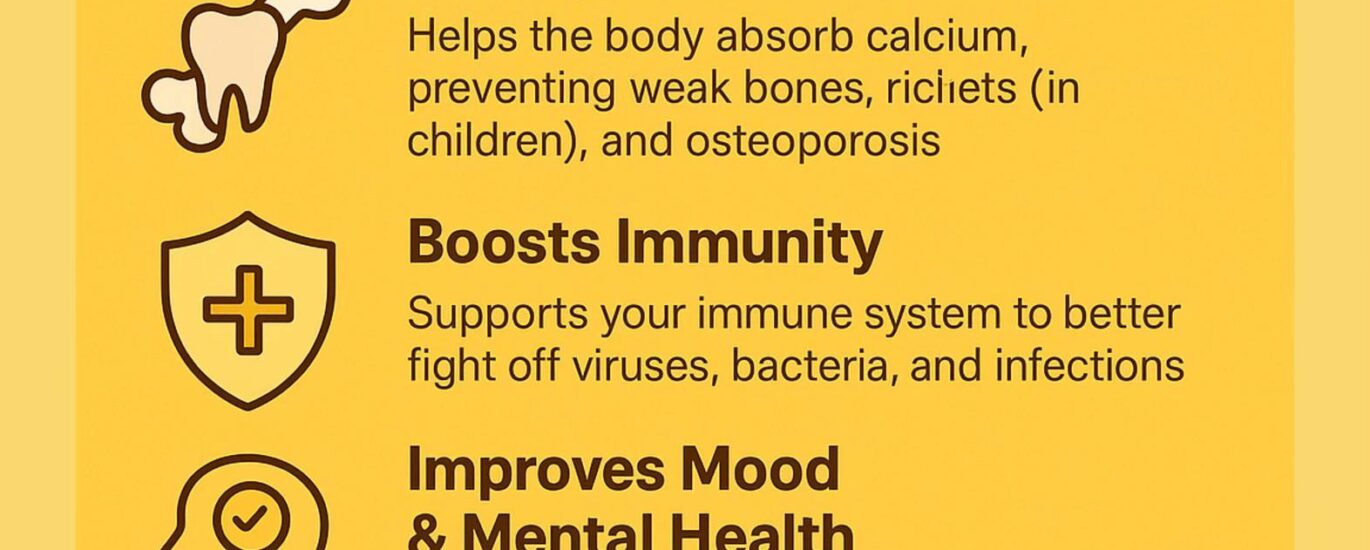
Vitamin D is an essential nutrient that plays an important role in maintaining healthy bones, teeth and muscles. It also helps the body absorb calcium and supports normal bone mineralisation. The body can produce vitamin D when skin is exposed to sunlight, while smaller amounts come from certain foods and dietary supplements.
Despite its importance, vitamin D deficiency can occur when a person has limited sun exposure, does not obtain enough vitamin D through diet, has difficulty absorbing nutrients, or has certain health conditions that affect vitamin D metabolism.
Understanding the symptoms of vitamin D deficiency, its causes and available treatment options can help people take appropriate steps to protect their health.
What Is Vitamin D Deficiency?
Vitamin D deficiency occurs when the body does not have enough vitamin D to support its normal functions. Vitamin D is particularly important for calcium absorption and healthy bones.
The usual blood test used to assess vitamin D status measures 25-hydroxyvitamin D [25(OH)D]. According to the U.S. National Institutes of Health (NIH), levels below 30 nmol/L (12 ng/mL) are considered too low and may affect health, while levels of 50 nmol/L (20 ng/mL) or above are adequate for most people.
However, vitamin D results should be interpreted by a healthcare professional because individual circumstances and laboratory testing can vary.
Why Does the Body Need Vitamin D?
Vitamin D has several important functions in the body. One of its primary roles is helping the digestive system absorb calcium and phosphate, which are essential for maintaining healthy bones and teeth.
Adequate vitamin D also contributes to normal muscle function. Severe or prolonged deficiency can affect bones and muscles, potentially resulting in conditions such as rickets in children and osteomalacia in adults.
Maintaining adequate nutrition is therefore an important part of a healthy lifestyle. Readers can explore additional nutrition and wellness information on MyMediTimes.
Common Symptoms of Vitamin D Deficiency
Vitamin D deficiency does not always cause obvious symptoms, particularly when levels are only mildly low. When deficiency becomes more significant, symptoms may become noticeable.
Bone Pain
Bone pain can occur with significant vitamin D deficiency because vitamin D is important for calcium absorption and normal bone mineralisation. Adults with deficiency may develop osteomalacia, which can cause bone discomfort or pain.
Muscle Weakness
Low vitamin D levels can be associated with muscle weakness. This may affect physical activity and mobility, particularly in older adults.
Weak or Fragile Bones
Long-term inadequate vitamin D and calcium can contribute to poor bone health. In children, severe deficiency can result in rickets, while adults can develop osteomalacia.
Increased Risk of Falls in Older Adults
Vitamin D deficiency can contribute to muscle weakness and, particularly in older people, may be associated with an increased risk of falls and fractures.
It is important to remember that these symptoms can have many possible causes. Experiencing one or more of them does not automatically mean that a person has vitamin D deficiency.
What Causes Vitamin D Deficiency?
There are several possible causes of low vitamin D levels.
Limited Sun Exposure
The body produces vitamin D when bare skin is exposed to sunlight. People who spend little time outdoors may therefore have less opportunity to produce vitamin D.
However, sunlight exposure must be approached sensibly because ultraviolet radiation can damage the skin. Sun exposure should not be used as a reason to avoid appropriate sun protection.
Not Getting Enough Vitamin D Through Food
Only a relatively small number of foods naturally contain vitamin D. These include oily fish, egg yolks and some animal products, while certain foods may be fortified with vitamin D.
Darker Skin
People with darker skin may produce less vitamin D from sunlight than people with lighter skin. This can be one factor contributing to low vitamin D status.
Older Age
The skin’s ability to produce vitamin D can decline with age. Older adults may therefore be at greater risk of inadequate vitamin D levels.
Problems Absorbing Nutrients
Certain digestive conditions can interfere with the absorption of vitamin D. Because vitamin D is fat-soluble, conditions that interfere with fat absorption may also affect vitamin D absorption.
Certain Medications and Health Conditions
Some medicines can affect vitamin D metabolism or absorption. For example, the NIH notes that corticosteroids can reduce vitamin D levels, while certain other medicines may interact with vitamin D supplements.
People taking regular medication should therefore speak with their doctor or pharmacist before starting high-dose vitamin D supplements.
Foods That Contain Vitamin D
Diet can contribute to maintaining healthy vitamin D levels.
Some sources include:
- Oily fish such as salmon, sardines, trout and mackerel
- Egg yolks
- Red meat
- Liver
- Fortified foods
- Some fortified breakfast cereals
- Vitamin D supplements when recommended
The amount of vitamin D obtained from food varies considerably. The NHS also identifies oily fish, egg yolks, red meat and fortified foods among dietary sources of vitamin D.
A balanced diet should remain the foundation of good nutrition rather than relying on supplements alone.
Can Sunlight Help Prevent Vitamin D Deficiency?
Yes, sunlight allows the body to produce vitamin D. However, the amount produced varies from person to person and depends on factors including skin pigmentation, age, location, season, clothing and the amount of skin exposed.
Importantly, vitamin D production should not come at the expense of skin safety. The NIH notes that ultraviolet radiation can cause skin cancer, so appropriate sun protection remains important.
People who have limited sun exposure or are at increased risk of deficiency may need to discuss dietary sources or supplementation with a healthcare professional.
How Is Vitamin D Deficiency Diagnosed?
A healthcare professional can determine whether testing is appropriate based on a person’s symptoms, health history and risk factors.
The principal blood test used to assess vitamin D status is 25-hydroxyvitamin D [25(OH)D].
Testing is particularly useful when a healthcare professional suspects deficiency or when a person has risk factors that make low vitamin D more likely.
People should avoid interpreting a test result without considering the clinical context.
Vitamin D Deficiency Treatment
Treatment depends on the severity of deficiency and the individual’s circumstances.
Dietary Changes
Increasing consumption of vitamin D-containing or fortified foods may help improve dietary intake.
Vitamin D Supplements
Healthcare professionals may recommend vitamin D supplements when dietary intake and sun exposure are insufficient or when deficiency has been diagnosed.
Vitamin D supplements are available in different forms, including vitamin D2 and vitamin D3. Both can increase blood vitamin D levels, although vitamin D3 may raise levels more effectively and maintain them for longer in some circumstances.
For diagnosed deficiency, a doctor may recommend a specific dose and treatment schedule based on the individual’s needs.
Follow Medical Advice
People should not assume that taking a very large dose will correct deficiency more quickly. The NHS notes that high-dose loading courses may sometimes be prescribed for severe deficiency, followed by lower maintenance doses.
The appropriate dose should therefore be determined by a healthcare professional.
Can Too Much Vitamin D Be Harmful?
Yes. More vitamin D is not necessarily better.
Excessive vitamin D, particularly from high-dose supplements, can cause abnormally high calcium levels. Symptoms of excessive vitamin D can include nausea, vomiting, muscle weakness, confusion, excessive thirst and urination, and kidney stones. Severe toxicity can cause serious complications.
For this reason, people should avoid taking high-dose vitamin D supplements without appropriate medical advice.
How Can Vitamin D Deficiency Be Prevented?
Prevention involves maintaining adequate vitamin D intake while following a balanced approach to nutrition and lifestyle.
Eat a Balanced Diet
Include vitamin D-containing foods and fortified foods as part of a varied diet.
Spend Sensible Time Outdoors
Regular outdoor activity can provide opportunities for vitamin D production while also supporting an active lifestyle. However, sun exposure should be balanced with appropriate protection from ultraviolet radiation.
Know Your Risk Factors
People who spend little time outdoors, older adults, people with darker skin and people with conditions affecting nutrient absorption may have a greater risk of vitamin D inadequacy.
Discuss Supplements With a Healthcare Professional
If you are concerned about vitamin D levels, speak with a doctor about whether testing or supplementation is appropriate.
Vitamin D and Overall Health
Vitamin D is an important nutrient, but it should not be viewed as a cure-all. Research continues to examine vitamin D’s relationship with different health conditions.
For example, although vitamin D is essential for bone health, clinical research has not shown that vitamin D supplementation prevents every disease associated with low vitamin D levels. The NIH notes that evidence does not support using vitamin D supplements as a general treatment for conditions such as cardiovascular disease or depression.
This makes it important to distinguish between treating genuine vitamin D deficiency and taking supplements in the hope of preventing unrelated health problems.
For more information about maintaining healthy daily habits, readers can also explore MyMediTimes’ health and wellness content.
Frequently Asked Questions About Vitamin D Deficiency
What are the main symptoms of vitamin D deficiency?
Possible symptoms include bone pain, muscle weakness and poor bone health. However, mild deficiency may not produce obvious symptoms.
What is the best test for vitamin D deficiency?
The usual blood test is serum 25-hydroxyvitamin D, also written as 25(OH)D.
Can I get enough vitamin D from food?
Some foods provide vitamin D, including oily fish, egg yolks and fortified foods. However, obtaining sufficient vitamin D from natural food sources alone can be difficult for some people.
Can vitamin D deficiency be treated?
Yes. Depending on the cause and severity, treatment may involve dietary changes, vitamin D supplements or both. Treatment should be guided by a healthcare professional.
Is taking more vitamin D always better?
No. Excessive vitamin D from supplements can be harmful and can cause dangerously high calcium levels.
Conclusion
Vitamin D deficiency is a common nutritional concern that can affect bone and muscle health. Limited sunlight exposure, inadequate dietary intake, certain health conditions, older age and other factors can contribute to low vitamin D levels.
Eating a varied diet, maintaining a healthy lifestyle and getting appropriate outdoor activity can help support adequate vitamin D status. When deficiency is suspected, a healthcare professional can determine whether testing is appropriate and recommend suitable treatment.
Most importantly, vitamin D supplements should be used responsibly. High doses should not be taken without medical guidance because excessive vitamin D can cause serious health problems.




One thought on “Vitamin D Deficiency: Symptoms, Causes, Treatment and Prevention”