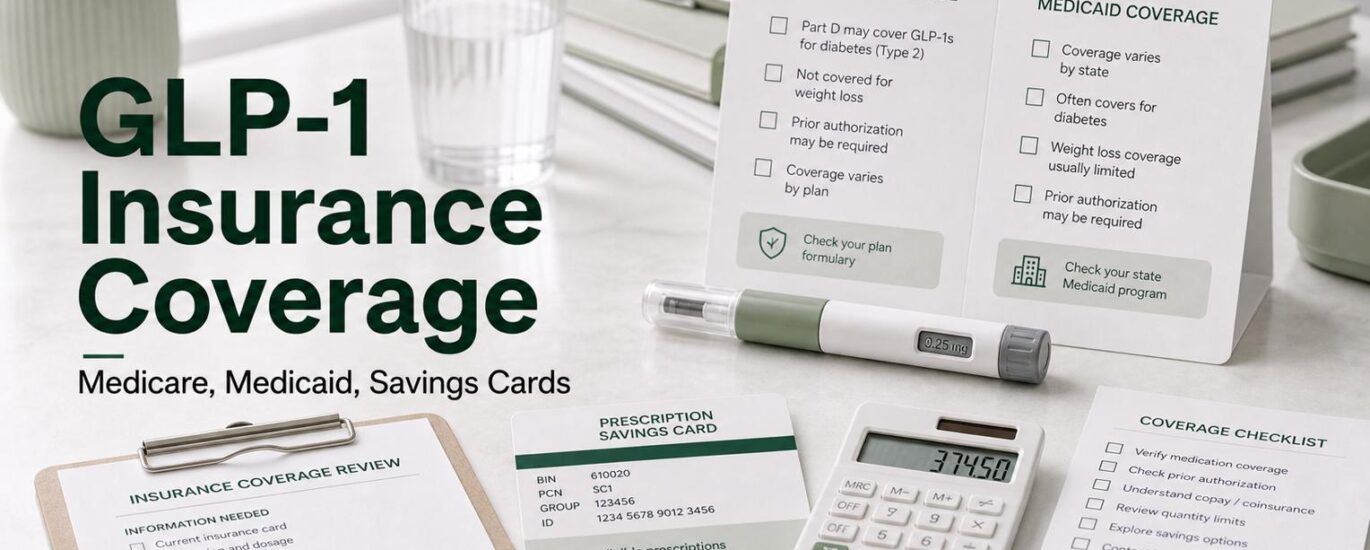
Getting GLP-1 medication covered by insurance can be confusing because coverage depends on your insurance plan, the medication prescribed, the reason it is being used, and your plan’s requirements. Some plans may cover certain GLP-1 or GLP-1-related medications for specific medical conditions, while others may require prior authorization or step therapy.
The FDA does not determine which prescription drugs an insurance company must cover. Coverage decisions are made by individual insurers and health plans, so checking your specific benefits is an important first step.
If you are considering a GLP-1 medication for diabetes or weight management, here are practical steps that can help you understand your coverage and work through the insurance process.
1. Check Your Insurance Formulary
Start by checking your insurance company’s prescription drug formulary. A formulary is the list of medications covered by your health plan.
Search for the specific medication prescribed by your healthcare professional rather than simply searching for “GLP-1.” Different medications can have different coverage rules.
Your plan may show whether a medication is:
- Covered
- Covered with restrictions
- Subject to prior authorization
- Subject to step therapy
- Available only at certain pharmacies
- Not covered
Coverage can also change when an insurance company updates its formulary.
2. Ask Whether Your Plan Covers the Medication for Your Condition
The reason a medication is prescribed can affect coverage.
For example, some GLP-1 medications are approved for type 2 diabetes, while certain medications in this broader group are also approved for chronic weight management in appropriate patients. The FDA lists approved uses and labeling for individual medications.
Ask your insurer:
“Is this medication covered for my specific diagnosis and prescribed use?”
This question can be more useful than simply asking whether your plan covers GLP-1 medications.
For additional information about how these medications work and when people may notice changes, read How Long Does GLP-1 Take to Work? A Detailed Guide.
3. Find Out Whether Prior Authorization Is Required
Some insurance plans require prior authorization (PA) before they will pay for certain medications.
With prior authorization, your healthcare provider may need to submit information to the insurer showing why the medication is medically appropriate.
The insurer may ask for information such as:
- Your diagnosis
- Previous treatments
- Relevant medical history
- Medication history
- Clinical documentation
- Your healthcare provider’s information
- Other requirements specified by the plan
The exact criteria vary by insurance company and plan.
4. Ask About Step Therapy
Another possible requirement is step therapy.
Under a step-therapy policy, the insurance plan may require you to try another covered treatment before approving the medication requested by your healthcare provider.
Ask your insurer:
“Does my plan require me to try another medication before this GLP-1 medication can be approved?”
If you have already tried another treatment, tell your healthcare provider. Documentation of previous treatment may be relevant to the insurance review.
5. Ask Your Doctor to Submit the Required Documentation
If prior authorization is required, your healthcare provider’s office can usually submit the necessary information to the insurance company.
Make sure your provider knows about:
- Previous medications you have tried
- Any relevant side effects
- Your medical history
- Your treatment goals
- Any previous insurance denials
- Documentation requested by your insurance plan
Do not change your prescribed medication or dosage simply to meet an insurance requirement. Discuss treatment decisions with your healthcare professional.
You can also learn more about possible GLP-1 side effects before starting or changing treatment.
6. Check Your Out-of-Pocket Costs
Even when a GLP-1 medication is covered, you may still have expenses.
Ask your insurance company about:
- Deductible
- Copayment
- Coinsurance
- Formulary tier
- Out-of-pocket maximum
- Quantity limits
- Pharmacy requirements
- Mail-order requirements
A medication being listed as “covered” does not necessarily mean it will have a low out-of-pocket cost.
7. Ask About Coverage Exceptions
If your insurance plan does not normally cover a particular medication, you may be able to ask your healthcare provider about a coverage exception when appropriate.
For Marketplace plans, HealthCare.gov explains that patients may request an exception in certain circumstances, including situations where covered alternatives have not worked or may cause harmful side effects. If an exception is denied, patients may have appeal rights.
You can review the official prescription-drug information from HealthCare.gov.
8. Appeal an Insurance Denial
An insurance denial does not always mean the process is over.
If your request is denied, read the denial letter carefully. It should explain why the insurer declined coverage and what options may be available.
Depending on your plan and situation, you may be able to:
- Request the reason for the denial.
- Ask your healthcare provider about submitting additional documentation.
- Request an internal appeal.
- Ask whether an external review is available.
- Check whether another covered medication is appropriate.
HealthCare.gov notes that people whose prescription exception requests are denied have the right to appeal and have the decision reviewed through the applicable process.
9. Check Medicaid or Medicare Rules Separately
If you have Medicare or Medicaid, do not assume that the rules are identical to those of private insurance.
Medicaid coverage can vary by state, and members should contact their state Medicaid program or health plan for coverage questions.
For Medicare beneficiaries, coverage also depends on the applicable Medicare rules, plan, medication, and approved use.
Because insurance policies can change, verify current coverage directly with your insurer before starting treatment.
10. Keep Your Insurance Information Ready
When calling your insurance company, have your insurance card and prescription information available.
Useful questions include:
- Is this medication on my formulary?
- Is it covered for my diagnosis?
- Does it require prior authorization?
- Is step therapy required?
- What is my copay or coinsurance?
- Is there a quantity limit?
- Do I need to use a specific pharmacy?
- What documentation does my doctor need to submit?
- What can I do if the request is denied?
- Is an appeal available?
Writing down the representative’s name, reference number, date, and information provided can also help you keep track of the process.
Can Lifestyle Changes Replace GLP-1 Medication?
Healthy eating, physical activity, adequate sleep, and other lifestyle habits can support weight management and metabolic health. However, these approaches should not be considered equivalent to prescription GLP-1 medications.
For practical information about nutrition and lifestyle habits, see How to Increase GLP-1 Naturally: Foods, Exercise and Healthy Habits.
If you are already taking a prescribed GLP-1 medication, talk with your healthcare professional before stopping or changing your treatment.
Final Thoughts
Getting GLP-1 medication covered by insurance usually starts with understanding your specific plan. Check the formulary, confirm whether your diagnosis and prescribed use qualify, ask about prior authorization and step therapy, and find out your expected out-of-pocket costs.
If coverage is denied, review the reason carefully and discuss documentation, exceptions, or an appeal with your healthcare provider and insurance company. Because coverage rules vary between plans, always confirm the current requirements directly with your insurer.