
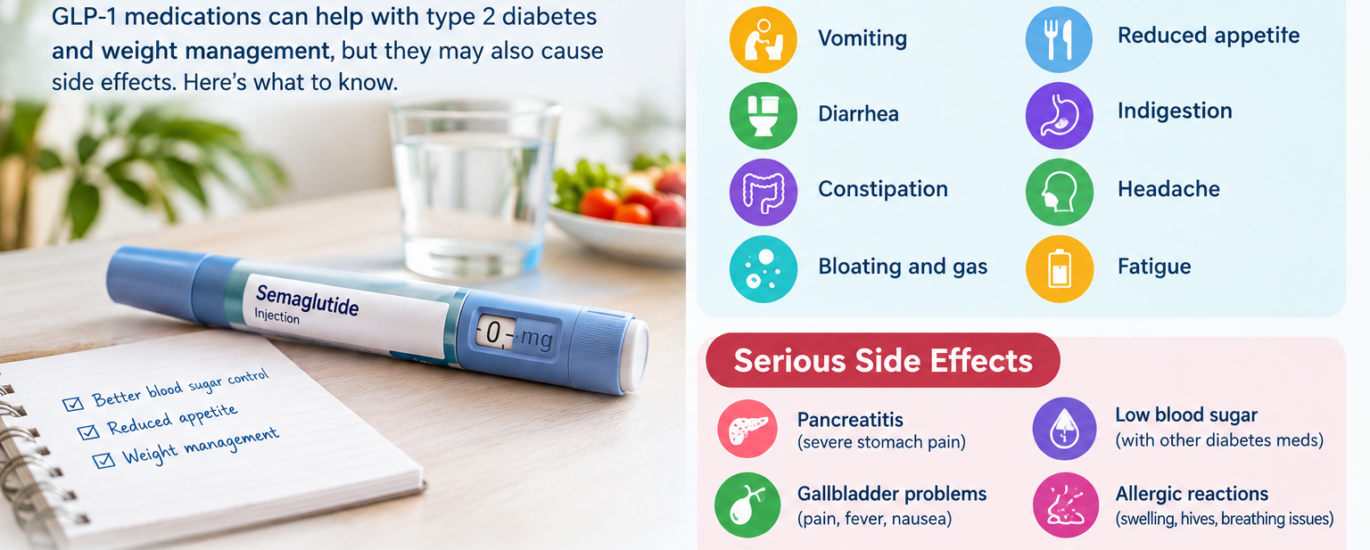
GLP-1 medications are increasingly used to help manage type 2 diabetes and support weight management. Medicines such as semaglutide, liraglutide, and tirzepatide can reduce appetite, improve blood sugar control, and slow digestion. However, they can also cause side effects, particularly during the early stages of treatment.
Common GLP-1 Side Effects
The most frequently reported side effects are related to digestion. These may include:
- Nausea
- Vomiting
- Diarrhea
- Constipation
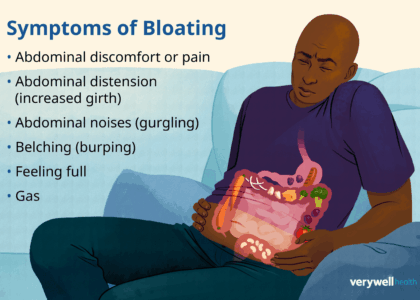
- Bloating and gas
- Stomach pain
- Reduced appetite
- Indigestion
- Headache
- Fatigue
According to MedlinePlus information on GLP-1 agonists, digestive symptoms are an important consideration when using these medications.
Eating smaller meals, staying hydrated, and avoiding foods that trigger stomach discomfort may help some people manage mild symptoms. Maintaining regular physical activity is also important for overall health. Learn more about the benefits of regular exercise.
Serious Side Effects
Most side effects are manageable, but some symptoms require prompt medical attention. Severe and persistent abdominal pain may be a warning sign of pancreatitis. Repeated vomiting or diarrhea can also cause dehydration and potentially affect kidney function.
Some GLP-1 medications also carry important warnings related to gallbladder problems, low blood sugar when combined with certain diabetes medicines, allergic reactions, and other medication-specific risks.
The FDA’s GLP-1 medication information provides additional safety information about these medicines.
How to Manage GLP-1 Side Effects
Taking the medication exactly as prescribed is important. Eating smaller portions, drinking enough fluids, increasing fiber gradually, and choosing nutritious foods may help reduce digestive discomfort.
If side effects are severe, persistent, or interfere with daily activities, speak with your healthcare professional. Do not change the dose or stop prescribed medication without medical guidance.
Final Thoughts
GLP-1 medications can be useful for eligible patients, but understanding their potential side effects is an important part of safe treatment. Mild nausea, constipation, diarrhea, and reduced appetite are common, while severe abdominal pain, persistent vomiting, dehydration, or allergic reactions require medical attention.




One thought on “GLP-1 Side Effects: Common Symptoms, Serious Risks, and How to Manage Them”