
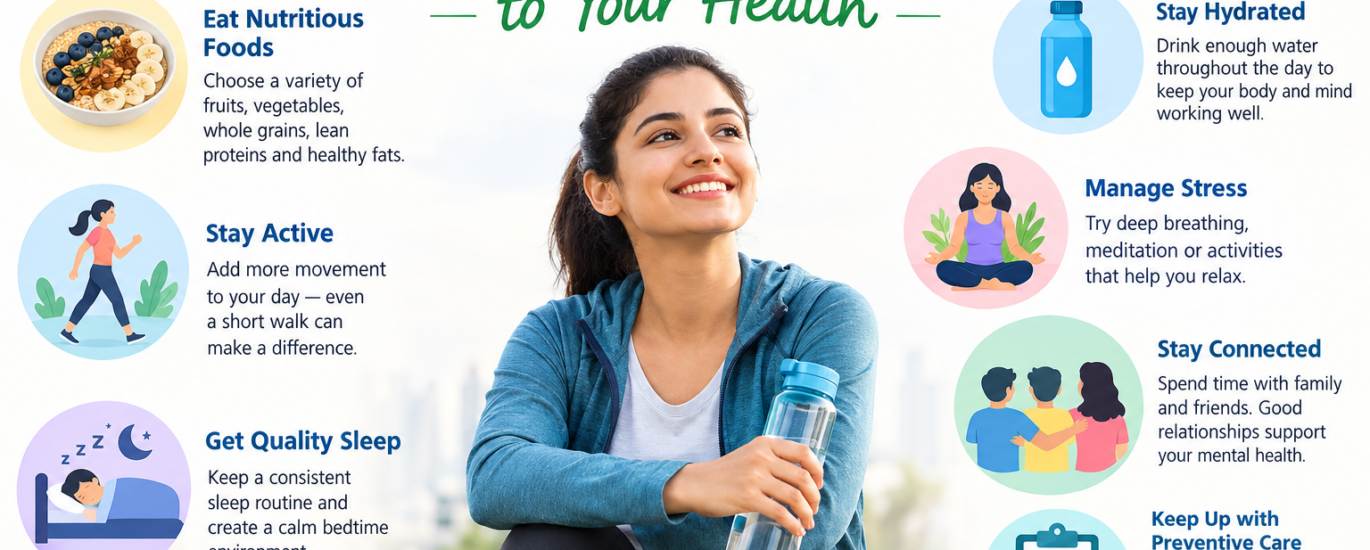
Your heart tirelessly keeps pumping throughout your body-delivering oxygen and nutrients to your organs and tissues. While genes and other issues play a role in cardiovascular health, your everyday eating patterns can also significantly contribute.
Let’s consider one of the most realistic starting points-food.
A heart-healthy eating plan doesn’t necessarily call for giving up all your favorite treats. It’s about creating an eating plan that balances a variety of nutritious foods while limiting high intake of salt, free sugars, and unhealthy fats. WHO recommends diets based on a wide variety of nutritious foods-vegetables, fruits, pulses, nuts and whole grains.
Let’s discuss a range of everyday foods and eating patterns that can assist with maintaining good cardiovascular health.
Why is your every day food eating pattern impacting your heart?
The kinds of food you eat on a regular basis have an impact on a variety of physiological responses, including your body weight, blood pressure, and also the kinds and balance of fats and carbs you take into your body.
Highly processed meals, excess salt, free sugars, unhealthy fat intake can make it more difficult to live a healthy lifestyle,
Conversely, a consistent intake of variety of whole foods can provide fibre, vitamin and minerals, proteins as well as an array of other nutrients the body requires.
The endeavor here is not about making every one meal perfect but to consistently maintain healthier choices and an eating pattern.
1. Load your plate with vegetables
Vegetables, an essential part of a balanced food consumption pattern have their health benefits.
Green leafy vegetables, carrots, tomatoes, broccoli, cauliflower, peppers and a whole lot more veggies provide different nutrients, adding variety and flavor.
Instead of seeing the veggies as mere side dishes, include them in your meals as a staple to boost fiber and vitamin contents. Try adding spinach or a handful of greens in your breakfast, bulk up lunch with various veggies, perhaps include a serving of veg broth/soup in your dinner, or have cut ready to go veggies with an array of healthy dips that help with a quick bite!
According to WHO, adults and kids over the age of 10 should take an intake of 400grams of fruit and veggies per day.
2. Increase consumption of fruit
Fruit delivers fibre and various vitamins in addition to several other essential nutrients your body demands.
You’ll be happy to hear that your daily quota can be met by various readily available fruits such as apples, bananas, oranges, berries as well as tropical fruit like papaya and guava, and others.
While there is nothing wrong with fruit juice, whole fruit has the advantage of giving you plenty of fiber and will require you to chew. Consider having whole fruit on an occasional basis to replace high-calorie desserts.
3. Eat whole grains
Whole grains can provide a fantastic source of dietary fiber. If your current diet is a bit restrictive, look into changing a range of it to include…
- Oats
- brown rice
- whole-wheat bread
- barley
- millets
- whole-grain cereals
The WHO has advised consuming carbs mostly from sources such as vegetables, fruit, nuts and whole grains.
For an Indian food eating pattern you can choose to include varied forms of grains and traditional cereals rather than refined ones, and eat a few healthy Indian pulses and meals that often include a range of grains within the preparation,
4. Pulses and beans should not be excluded from the food basket
Legumes such as lentils, chickpeas, beans, etc are beneficial sources of proteins and fibers as well as filling to make up your meal! The best advantage is they can be integrated into many of your daily meals. From simple lentil (dal) dishes, to rajma and chana masalas (pulses often served with grains or breads) right through to chickpea salads! Changing one or two fatty meal occasions to this simple pulse consumption eating pattern is easy.
5. Healthy food habits with the fat-soluble fats (unsaturated)
Dieticians consider unsaturated sources of fat essential for health compared to others. Take for example,
- almonds
- nuts
- flaxseeds
- chia seeds
- sunflower seeds
- avocado
- fish
Certain vegetable oils like ground nut or rice bran oil (moderate use of appropriate forms when choosing to cook with oil) can also be consumed in moderate amounts as you maintain portion sizes. It’s important that even with this eating pattern you remain vigilant with the intake, due to the fact fat sources pack a high calorie value.
WHO suggests limiting saturated fats and cut out industrially produced trans-fat-they are simply damaging to our bodies.
6. Consider your salt intake carefully
It’s a significant contributing factor in increasing blood pressure – an imperative factor related to cardiovascular health. To decrease salt intake become mindful of packaging such as that on food products, sauces, processed meals which may have substantial salt levels. Avoid auto-placing added salt in your meals and experiment with herbs and other flavoring like pepper, onion, garlic or maybe use lemon juice if your food calls for it.
7. Be mindful of added AND free sugars
Sure it’s a sweet craving that’s hard to resist from time to time; however having excess free sugars will have an impact on your body making it that much more difficult to achieve other healthy goals. Sugary drinks, sweets, processed snacks which provide very minimal nutrients add on considerable value towards a person’s intake and intake of sugar value. Pick water over sugary drinks and see having sweets as a special occurrence rather than an eating habit.
8. Practice having a balanced plate
An ideal and simple meal shouldn’t be complicated. For example, ideally on any given plate that a person eats off from you can spot…
– Vegetable food,
-Whole grain or other nutritionally suitable carbohydrate that’s prepared properly.
– A protein dish,
– An appropriately considered healthy fat portion size.
What precisely this translates to depends significantly on how much fiber one is consuming per meal, your overall activity level and other health implications as well as your cultural choices. There isn’t a magic food combination to suit all-WHO also state healthy diets do differ with the individual, their cultural eating habits as well as local produce.
9. Tiny food decisions matter heaps and can have an impact when followed on and off
Complete food habits changes are often challenging to maintain. Try by opting for some simple substitution:
•Sugared soft drinks
•Highly refined flour goods
•Deep-fried snacks all week round
•Sweets after each meal it could instead be this
•Water or simple sweetened flavored waters
•Whole-grain varieties of anything from breads to biscuits and other packaged foods
•Grilled or less processed alternative
•fresh fruit on an occasional basis
Small adjustments are easier to stick to than rigid diets.
10. Only Food isn’t sufficient for Heart Health
An excellent eating plan and nutritious diet comes with different healthy lifestyle choices. Appropriate physical exercise; enough Sleep; keeping Stress levels down; refraining from Tobacco smoking, having good Sleep and managing your body’s weight can all affect you.
For adult’s,WHO recommends a minimum of 150 minutes moderate physical exercise per week. Also aim to undertake muscle-strengthening activities two times per week. Your article on “Why Walking Every Day Matters More Than You Think,” published on My Medi Times could be relevant to this subject and could potentially linked to this article.
Frequently Asked Questions
What foods are healthy for your heart?
Fruits, veggies, pulses, and whole grains, coupled with small amounts of healthy fats, and low-sodium versions of packed foods work best together. Fruit may help but it’s also healthy in reasonable quantities.
Is it healthy for a person to eat fruit?
Yes it’s good to eat fruits because fruits provide you fiber which your body wants. It could be a fruit every day from now on with your morning breakfast, or simply at dinner.
Are all fats bad?
Not necessarily at all; there are some fat soluble items you can take on a meal such as your avocado and oily fruits or nuts. But saturated fats which contribute to heart damage must be reduced.
How many grams of salt is appropriate for an adult?
WHO guidelines suggest having no more than 2 G of sodium per day, which converts to roughly 5G of salt.
Can an eating plan solve heart health issues?
While an excellent diet can greatly assist, various factors can contribute to a person’s heart health such as cardiovascular exercise, cigarette smoking, genes, body weight.
Conclusion
Living with a good food diet to support your heart doesn’t have to involve anything complicated. You can start by increasing the intake of a selection of nutritious vegetables, whole grain food, legumes and fruits whilst decreasing the usage of excessive salt, free sugar as well as unhealthy fat items. A nutritious eating routine maintained for a long time provides benefits for your health not a restrictive diet followed only in certain phases of life.




One thought on “Everyday Foods That Help Look After Your Heart”