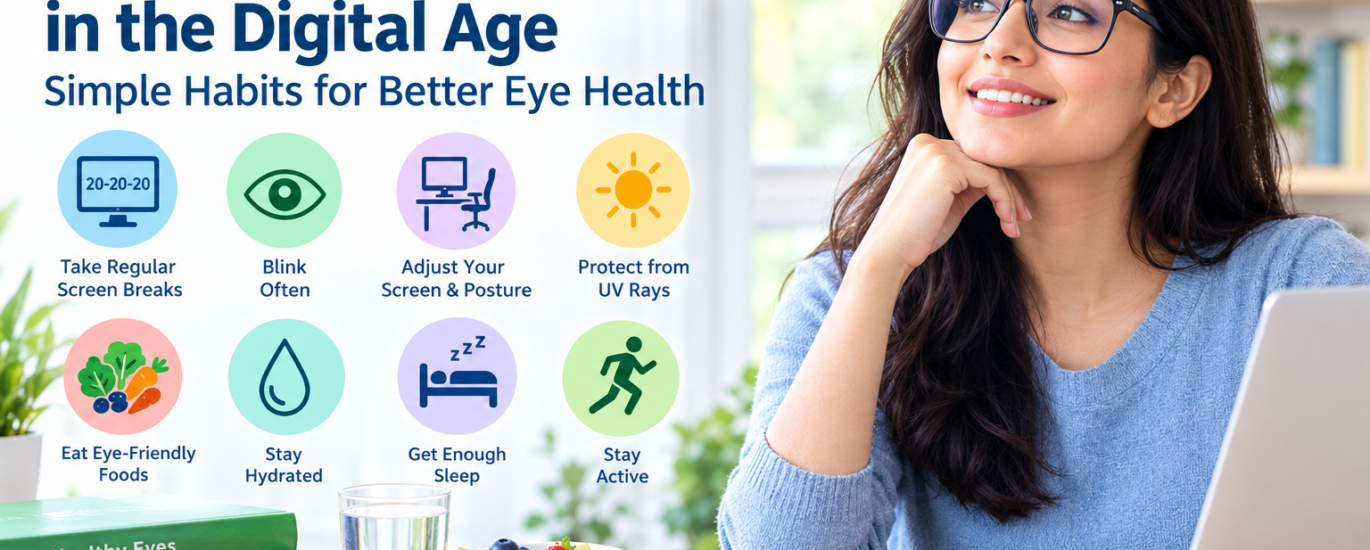
Screens have become part of everyday life. We use smartphones to communicate, computers to work, tablets to study, and televisions to relax. While digital devices are extremely useful, spending long periods looking at screens can leave your eyes feeling tired, dry, or uncomfortable.
Digital eye strain can involve symptoms such as tired eyes, dryness, irritation, headaches, blurred vision, and difficulty focusing. Long periods of screen use can also reduce how frequently we blink, which may contribute to dry-eye symptoms.
The good news is that several simple habits can help you take better care of your eyes without completely giving up your favorite devices.
What Is Digital Eye Strain?
Digital eye strain refers to eye and vision-related discomfort associated with prolonged use of computers, smartphones, tablets, and other digital screens.
Common symptoms can include:
- Tired or sore eyes
- Dryness
- Burning or irritation
- Headaches
- Blurred vision
- Difficulty focusing
- Increased sensitivity to light
- Neck or shoulder discomfort
These symptoms do not necessarily mean that your eyes have been permanently damaged. The National Eye Institute notes that looking at a computer for long periods can tire the eyes, and taking regular breaks can help.
Why Do Screens Make Your Eyes Feel Tired?
When you concentrate on a screen, you may blink less frequently than normal. Less blinking can allow the surface of the eye to dry out.
Screen distance, lighting, glare, posture, text size, and the amount of time spent continuously looking at a display can also influence comfort.
A poorly positioned monitor may create additional neck and shoulder discomfort, while excessive glare can make it harder to look comfortably at the screen.
This is why eye health is not only about the eyes themselves. Your workspace and daily routine also matter.
Try the 20-20-20 Rule
One of the easiest habits to introduce is the 20-20-20 rule.
Every 20 minutes:
Look at something about 20 feet away for approximately 20 seconds.
The National Eye Institute recommends this type of screen break to give your eyes a chance to rest.
You can make the habit easier by:
- Setting a gentle reminder
- Looking out of a window
- Looking across the room
- Standing up during the break
- Taking a few slow blinks
- Stretching your shoulders and neck
These short breaks can also help interrupt long periods of sitting.
For another simple movement habit, read Why Walking Every Day Matters More Than You Think on My Medi Times.
Remember to Blink
Blinking may seem automatic, but people can blink less while concentrating on digital screens.
Try to consciously blink normally while working. If your eyes feel dry or irritated, take a short screen break rather than continuing to stare at the display.
Persistent dryness should not simply be blamed on screen time. Dry eye can have many causes, and persistent symptoms may require an eye-care professional’s evaluation.
Adjust Your Screen Position
Your screen should be positioned comfortably so you do not have to constantly bend your neck or strain to see the display.
A practical workstation setup includes:
- Keeping the monitor at a comfortable height
- Avoiding excessive screen glare
- Sitting at a comfortable viewing distance
- Keeping your shoulders relaxed
- Supporting your lower back
- Positioning the keyboard and mouse comfortably
- Increasing text size if you are struggling to read
Good ergonomics can reduce unnecessary physical discomfort during long periods of computer work.
Pay Attention to Lighting
The room around your screen matters too.
A very bright screen in a dark room can feel uncomfortable, while strong reflections from windows or overhead lights can create glare.
Try to:
- Reduce reflections on the screen
- Position your monitor away from direct glare
- Adjust screen brightness to suit the environment
- Use comfortable room lighting
- Avoid working in complete darkness
You do not need an expensive setup. Small changes can make your workspace more comfortable.
Eat for Better Eye Health
Eye health is also connected to your overall nutrition.
A balanced diet provides nutrients needed for normal body function. Fruits and vegetables, particularly leafy greens, can be part of a nutritious eating pattern.
Foods commonly included in a balanced diet for overall eye health include:
- Spinach
- Kale
- Broccoli
- Carrots
- Bell peppers
- Citrus fruits
- Eggs
- Nuts and seeds
- Fish such as salmon and tuna
The National Eye Institute also highlights the importance of a balanced diet and foods such as leafy greens and fish as part of healthy-vision habits.
For more nutrition-related information, you can also explore the My Medi Times article on Iron Deficiency and other healthy-eating resources.
Stay Hydrated
Hydration is another everyday habit worth considering.
Although drinking water is not a cure for eye problems, maintaining adequate fluid intake is part of general health and can support normal body functions.
If you spend long hours working on a computer, keep water nearby and take regular breaks.
Don’t Forget About Sleep
Your eyes are part of your overall body, and your daily routine matters.
Long periods of screen use late at night can also interfere with healthy bedtime habits for some people. Creating a consistent evening routine can make it easier to disconnect from devices and prepare for sleep.
Try:
- Reducing unnecessary screen use before bed
- Keeping a consistent sleep schedule
- Making your bedroom comfortable and dark
- Avoiding stimulating activities immediately before bedtime
- Giving yourself time to relax
If you often wake up tired despite getting what seems like enough sleep, read Why You Feel https://mymeditimes.com/waking-up-without-energy-what-could-be-causing-your-fatigue/Tired Even After Sleeping 8 Hours: Hidden Causes of Everyday Fatigue on My Medi Times.
Protect Your Eyes From the Sun
Digital screens are not the only thing your eyes encounter every day.
Sun exposure is another reason to think about eye protection.
The National Eye Institute recommends sunglasses that block 99% to 100% of UVA and UVB radiation. Sunglasses can be useful even when the weather is cloudy because ultraviolet radiation can still reach you.
When spending extended periods outdoors, consider:
- Wearing UV-protective sunglasses
- Using a hat with a brim
- Avoiding looking directly at the sun
- Using appropriate protective eyewear during activities that could cause eye injuries
Exercise Can Support Overall Health
Eye health should be viewed as part of your broader approach to wellness.
Regular physical activity supports cardiovascular health, sleep, mental well-being, and healthy aging. The CDC reports that regular physical activity provides important health benefits and can improve sleep quality while lowering the risk of several chronic conditions.
You do not need to spend hours at the gym.
Simple activities such as:
- Walking
- Cycling
- Swimming
- Stretching
- Dancing
- Household activities
- Recreational sports
can help you become more active.
For more ideas, explore Why Regular Exercise Matters on My Medi Times.
Give Your Eyes a Break From Your Phone
Many people remember to take breaks from their computers but continue looking at their phones during those breaks.
Instead of switching from your laptop to your smartphone, consider using some breaks to:
- Walk around
- Look outside
- Stretch
- Talk with someone
- Drink water
- Relax your eyes
- Do a short breathing exercise
A genuine screen break means giving your eyes a break from digital displays.
Don’t Ignore Changes in Your Vision
Temporary eye fatigue can happen after prolonged screen use. However, recurring or persistent vision problems deserve attention.
Speak with an eye-care professional if you experience:
- Persistent blurred vision
- Frequent headaches associated with vision
- Eye pain
- Persistent dryness or irritation
- Double vision
- Sudden changes in vision
- Difficulty seeing clearly
- Increasing sensitivity to light
A comprehensive eye examination can help identify eye problems, sometimes before noticeable symptoms develop.
Do not rely solely on online information to diagnose an eye condition.
A Simple Daily Eye-Care Routine
You can make eye care part of your normal routine.
Morning
Start the day with a healthy breakfast and avoid immediately spending long uninterrupted periods on your phone.
During Work
Follow the 20-20-20 rule and adjust your workstation so that your screen is comfortable to view.
Afternoon
Take a short walk, stretch, drink water, and spend some time away from digital screens.
Evening
Reduce unnecessary screen use and give yourself time to relax before bed.
Outdoors
Wear sunglasses that provide appropriate UV protection.
Regularly
Arrange appropriate eye examinations, particularly if you notice changes in your vision or have been advised to have routine eye checks.
7 Easy Habits for Healthier Eyes
If you want to keep the routine simple, remember these seven habits:
- Take regular screen breaks.
- Follow the 20-20-20 rule.
- Blink regularly while using screens.
- Keep your screen and workspace comfortable.
- Eat a varied, nutritious diet.
- Protect your eyes from UV exposure.
- Get professional eye care when needed.
None of these habits requires a complicated lifestyle change.
Final Thoughts
Modern technology is not going away, and there is no need to avoid screens completely. The goal is to use them more thoughtfully.
Regular breaks, comfortable screen positioning, good lighting, nutritious food, physical activity, adequate sleep, hydration, and appropriate eye protection can all become part of a healthier daily routine.
Most importantly, do not ignore persistent changes in your vision. If your eyes continue to feel uncomfortable or your vision changes, professional evaluation is the safest approach.
Healthy eyes are an important part of maintaining independence, productivity, and quality of life. A few small habits today can help you take better care of your vision for the future.