
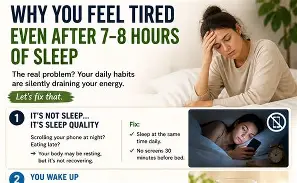
Have you ever gone to bed at a reasonable time, slept for eight hours, and still woken up feeling exhausted? You are not alone. Feeling tired after what seems like a full night’s sleep can be frustrating, especially when you have responsibilities to manage throughout the day.
The problem is that sleep duration is only one part of healthy sleep. Your sleep quality, stress levels, daily routine, physical activity, diet and overall health can all influence how energetic you feel.
For most adults, getting at least seven hours of sleep is recommended, but good-quality and uninterrupted sleep also matters. The Centers for Disease Control and Prevention notes that feeling tired even after getting enough sleep can be a sign of poor sleep quality.
Let’s look at three important reasons why eight hours of sleep may not always leave you feeling refreshed.
1. Is 8 Hours of Sleep Always Enough?
Eight hours of sleep is often described as the perfect amount, but there is no single number that works identically for everyone.
According to the CDC, adults aged 18–60 generally need 7 or more hours of sleep per night, while recommended sleep duration changes slightly with age.
This means that sleeping for eight hours can be perfectly adequate for many adults, but the number of hours alone does not tell the whole story.
Your sleep needs can vary
Your ideal sleep duration can be influenced by factors such as:
- Age
- Daily activity levels
- Lifestyle
- Work schedule
- Stress
- Overall health
- Sleep patterns
- Individual differences
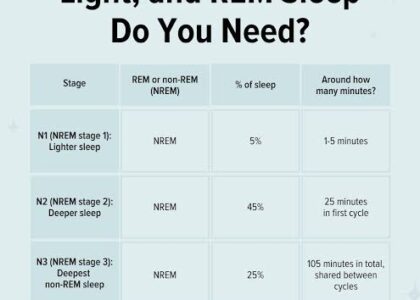
For example, someone who sleeps eight hours but wakes up repeatedly during the night may not feel as refreshed as someone who gets eight hours of uninterrupted sleep.
More sleep is not always the solution
If you regularly sleep for eight or nine hours but still wake up exhausted, simply adding another hour may not solve the problem.
Instead, consider asking yourself:
- Do I wake up several times during the night?
- Do I feel refreshed when I get out of bed?
- Do I have a consistent bedtime?
- Do I use my phone or computer immediately before sleeping?
- Am I feeling stressed or worried at bedtime?
- Do I feel excessively sleepy during the day?
These questions can help you look beyond sleep duration and consider the overall quality of your sleep.
Why sleep matters beyond energy
Sleep supports many aspects of physical and mental wellbeing. It helps the brain with learning, memory, concentration and decision-making while also supporting physical health.
Therefore, consistently poor sleep can affect much more than your morning energy levels.
Key takeaway: Eight hours can be enough for many adults, but waking up tired regularly suggests that sleep duration may not be the only factor worth considering.




One thought on “Waking Up Without Energy: What Could Be Causing Your Fatigue?”