
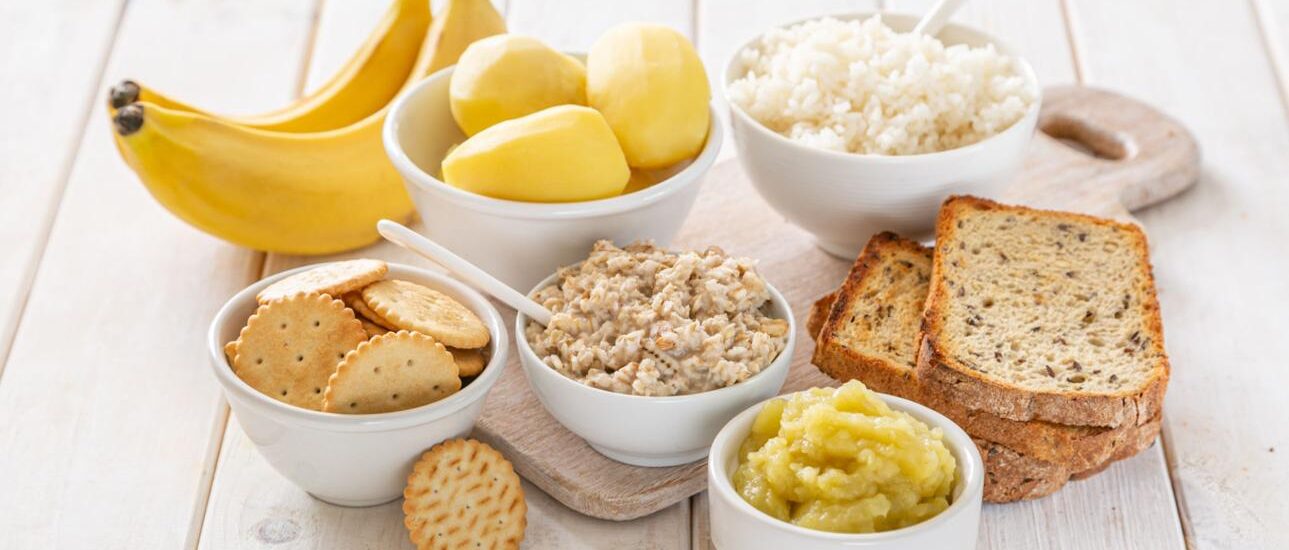
Diarrhea can cause your body to lose water and electrolytes, so choosing gentle foods and drinking enough fluids can help support recovery. You don’t necessarily need to stop eating; small, simple meals are often easier to tolerate.
What to Eat When You Have Diarrhea
1. Bananas
Bananas are soft and easy to digest. They also provide potassium, an electrolyte that can be lost through frequent loose stools.
2. White Rice
Plain white rice is generally easy to digest and can be a simple option when your stomach feels unsettled.
3. Toast and Crackers
Plain toast, crackers, and other simple carbohydrates may be easier to tolerate than rich or heavily seasoned foods.
4. Potatoes
Plain boiled or baked potatoes can provide energy without adding much fat. Avoid heavy sauces, butter, or spicy toppings.
5. Oatmeal
Plain oatmeal provides soluble fiber and can be a gentle breakfast option for some people.
6. Applesauce
Applesauce is soft and easy to eat. It can be a useful alternative when whole fruits are temporarily difficult to tolerate.
7. Soup and Broth
Clear soups and broths can provide fluids and some sodium. Avoid very fatty or spicy soups if they worsen your symptoms.
8. Plain Chicken or Other Lean Protein
Once you can tolerate food comfortably, plain baked or boiled chicken can provide protein without adding excessive fat.
What to Drink
Fluids are especially important. Take frequent small sips of water, clear broth, or an oral rehydration solution (ORS). ORS contains the right balance of water, glucose, and electrolytes to help replace losses from diarrhea.
If diarrhea is significant, an ORS available from a pharmacy can be more appropriate than relying only on plain water.
Foods and Drinks to Limit
While recovering, you may want to avoid:
- Fried and greasy foods
- Very spicy foods
- Alcohol
- Large amounts of caffeine
- Very sugary drinks
- Foods containing sugar alcohols such as sorbitol
- Milk and other dairy products if they make symptoms worse
You don’t necessarily need to follow a strict BRAT diet (bananas, rice, applesauce, toast) for several days. Once your appetite returns, gradually return to a varied, nutritious diet as tolerated.
When to Seek Medical Help
Seek medical attention if diarrhea is severe or persistent, or if you develop blood or black stools, severe abdominal pain, high fever, repeated vomiting, confusion, or signs of dehydration such as very little urine, extreme thirst, dizziness, or unusual weakness.


One thought on “What to Eat When You Have Diarrhea”