
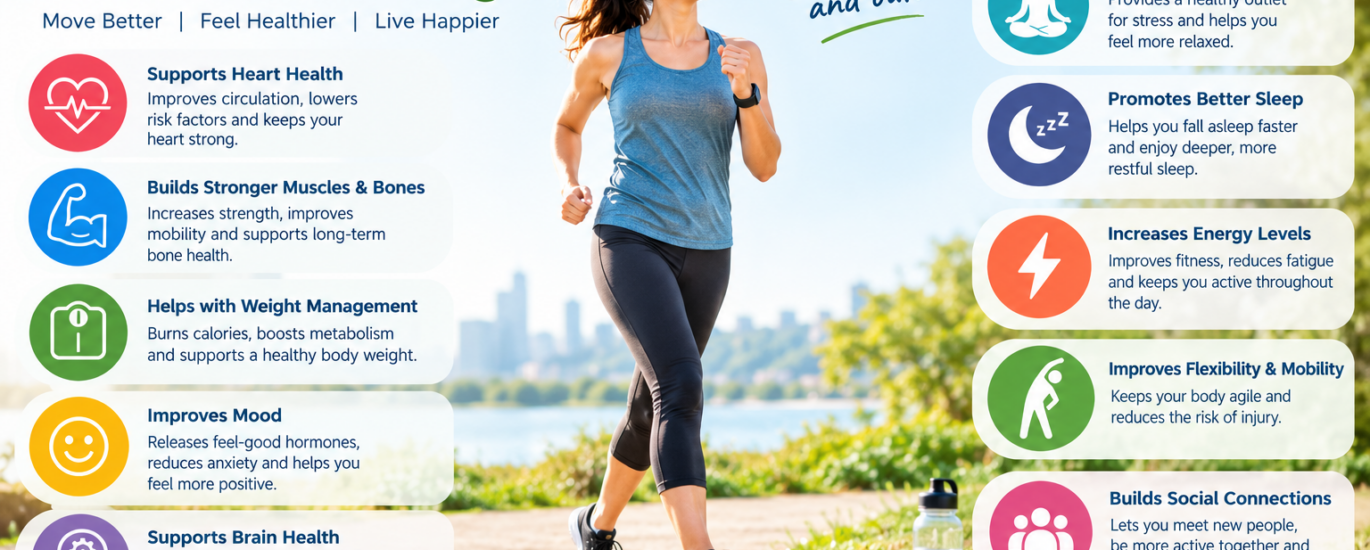
Regular exercise is one of the easiest ways to boost your lifestyle. You don’t need to dedicate hours to working out in order to reap the rewards of an active lifestyle. Walking, biking, swimming, stretching, dancing and other activities can be integrated into our lives.
Exercise has wider-ranging benefits such as boosting mental wellbeing, improving sleep and energy, and reducing the effects of daily stress. The combination of exercise plus a well-balanced diet, rest, and other healthy habits can greatly improve your health.
What Is Regular Exercise?
As the name suggests, regular exercise refers to exercising consistently rather than occasionally. The kinds of exercise and how often you should do them depends on many factors including your age and level of fitness.
A good fitness regime will comprise:
- Aerobic exercises: walking, jogging, biking, swimming or dancing
- Strength-building activities: bodyweight or weight training
- Flexibility exercises: stretching
- Balance activities: exercising to improve balance
You don’t need to do all these kinds of activities, as the key is to find fun exercises that you’ll enjoy doing.
1. Exercise Strengthens the Heart
Exercise promotes cardiovascular health as it allows us to engage our heart and lungs in meaningful ways. For instance, you can greatly benefit your heart by regularly jogging, going for walks or swimming. If you have a pre-existing medical condition, it’s always a good idea to speak to your doctor about how to go about exercising safely.
2. It Helps With Building Stronger Muscles and Bones
It’s never too late (or too early) to strengthen your muscles and bones. You can do bodyweight exercises and simple resistance exercises like lunges and push-ups at the comfort of your own home.
As you get better, you can challenge yourself with more advanced exercises.
3. Exercise Helps With Weight Management
Exercise burns calories and enables you to maintain a healthy weight, especially when paired with a healthy diet. You shouldn’t exercise just to drop a few sizes, as exercise has huge benefits beyond assisting with weight management.
Instead of opting for extreme measures to shed pounds and then regain them once you stop exercising, it’s best to focus on finding a sustainable way to stay fit.
4. Regular Exercise Is Great for Mood
Exercise is one of the best ways to boost your mood and mental wellbeing. Not only does it open the door to a fitter and stronger body, but it also helps you to cope with day-to-day stresses and general unhappiness.
You could take up walking or join a fitness class to help you lose track of everyday worries. Alternatively, you could cycle with friends or attend a yoga session. You don’t have to do strenuous exercises to get a happy burst. In fact, a simple walk can be all you need to feel refreshed.
5. It Helps You To Cope With Everyday Stresses
We all get stressed out by work, family matters, and even studies. When we feel this way, we often want to shut out the world and not think about the source of our stress. One of the best ways to do this is to get exercising!
A short walk here and there can help take your mind off the tracks. As someone who regularly exercises, I find that having my daily dose of exercise is a fantastic way to release tension and not get caught up in the hustle and bustle of everyday life.
Getting a good night’s sleep and exercising are also good ways to help you cope with the stresses of daily life. These simple but highly effective habits can be combined to really help your mental wellbeing.
6. It May Help You To Sleep Better
Exercising regularly may help you to develop healthier sleep patterns. If you’re getting a good night’s sleep and exercising on a regular basis, you’ll soon notice that you’re sleeping better.
It’s worth noting that people vary in how their bodies react to exercising close to bedtime. If you find that exercising keeps you awake at night, it’s best to avoid exercising before you go to bed. On the other hand, if you find that exercising doesn’t affect your sleep, then you’re in a lucky position! Good sleeping patterns and regular exercising go hand-in-hand.
7. You’ll Notice an Increase In Your Energy Levels
It seems kind of counterintuitive that exercising can help boost energy levels, but it’s true!
Not only does regular exercising build up your body and help you fight the effects of a sedentary lifestyle, but it can also be used as a tool to fight fatigue. If you’re sitting down most of the day, it’s a good idea to get some form of exercise or stretch every so often. For instance, you could walk around the room while you’re talking on the phone or take a short stroll after your meals.
8. It Boosts Brain Function and Improves Memory
Exercise is vital for the good health of your brain. In fact, exercising promotes brain activity, memory, and many other facets of neurological functioning. It does this by boosting blood circulation round the body.
Exercises that involve balancing and exercising your mind are also beneficial. You can get your brain working and exercising your body by walking around the block while listening to an interesting podcast or learning a new sport.
9. It Helps To Improve Flexibility
Flexibility is an important aspect of exercising and life in general. As you get older, it’s crucial that you keep exercising to stay flexible. You can simply stretch out your arms and legs every so often.
Some stretching exercises are really simple and you can do them while watching TV. Remember to only stretch as far as is comfortable. Always remember to stretch regularly but gently.
10. You Can Also Get Fit With Friends
Exercising with a friend can open the door to a more active lifestyle. You can join a local walking group or go for a swim. You could also play a sport or do a fitness class together. Having someone else to exercise with can help to keep you motivated and committed.
How Much Exercise Do You Need?
The amount of exercise you need depends on a number of factors, including your age. However, if you’re new to exercising, it’s advisable that you start slow and work your way up. The best thing to do is find out how much exercise is right for you. If you lead a generally sedentary lifestyle, you could start by walking for 10 minutes, five days a week. The following week, you could add more time on to your walks. You could also do some exercises to build up your strength. By the fourth week, you should be able to develop a solid fitness regime that comprises both aerobic and strength-building activities.
The best fitness regime is a safe and realistic one that you can stick with.
Here Are Some Simple Ways That You Can Get Fitter:
- Go for a walk after your meals
- Take the stairs when you can
- Walk while talking on the phone
- Sit less
- Do more active chores at home
- Cycle or walk to get to places if you can
- Do some form of stretching every day while watching TV
- Spend more time outside
- Get into an interesting hobby that involves some form of exercise
All of these small activities can really add up.
Exercise and Mental Wellbeing
Your mental wellbeing is deeply entwined with your physical wellbeing. Exercise provides us with an opportunity to step away from the stresses of life and get away from our TVs and laptops. Exercise is a great way to help us unwind and clear our minds, as seen in activities like walking, yoga, swimming or even biking. However, exercise should not be used as a coping mechanism for mental illnesses. If you suffer from mental illnesses like anxiety or depression, you should always seek the help of a trained professional.
How To Stay Motivated
The last thing you want when exercising is to feel bored. The best way to combat boredom is to find something you really enjoy. It’s also important to set and achieve realistic goals. You could work out for a certain amount of time, do a certain number of exercises, or work out regularly. It’s also a good idea to try and mix up your exercise regime so that you don’t get bored. The last thing to keep in mind is not to quit when you miss a day, but to simply get back on track the following day.
- Don’t overexert yourself
- Always warm up before doing more strenuous activities
- Make sure to drink enough water
- Do the correct posture during your exercises
- Wear the right shoes and clothes
- Make sure to let your body rest and recover in between sessions
- Call for professional help if you’re concerned about your health in relation to exercising
Frequently Asked Questions
Is walking enough exercise?
Walking is an excellent form of exercise, especially if you’re new to exercising. Not only does brisk walking promote heart health, but walking for longer sessions can promote physical activity. You can also combine walking with other activities to make it more interesting.
Can exercise improve my mental wellbeing?
Exercising can really help with boosting mood and coping with day-to-day stresses, but if you’re struggling with mental illnesses, always seek professional help.
Do I need to visit a gym to exercise?
No, exercising doesn’t have to be done at the gym. You can try walking, running, swimming, stretching, working out with your own bodyweight and so much more. There are countless ways to exercise without a gym membership.
How can newbies get into exercising?
Newbies should start by doing activities that they enjoy and find comfortable. You can then work your way up to doing more difficult activities as you get more confident.
Is it necessary to exercise every day?
You don’t need to do a strenuous workout every day. In fact, a good fitness regime is all about balance and getting enough rest.
Final Thoughts
Regular exercise has so many benefits other than helping you look good. It boosts heart health, builds stronger muscles and bones, improves flexibility, promotes better sleep, increases your energy levels and even boosts mental wellbeing. The most important thing is to stay consistent with your exercising. You don’t need to have a complicated fitness regime to look good and feel good. You can simply start with walking or stretching and then build up your exercising. You can also find a sport you really enjoy. Making exercising a part of your life, along with eating well, sleeping enough and making other healthy decisions, will help you lead a healthier lifestyle. For more helpful tips on health, fitness, diet, and wellbeing, visit My Medi Times – Health Is Wealth.



6 thoughts on “Why Regular Exercise Matters”