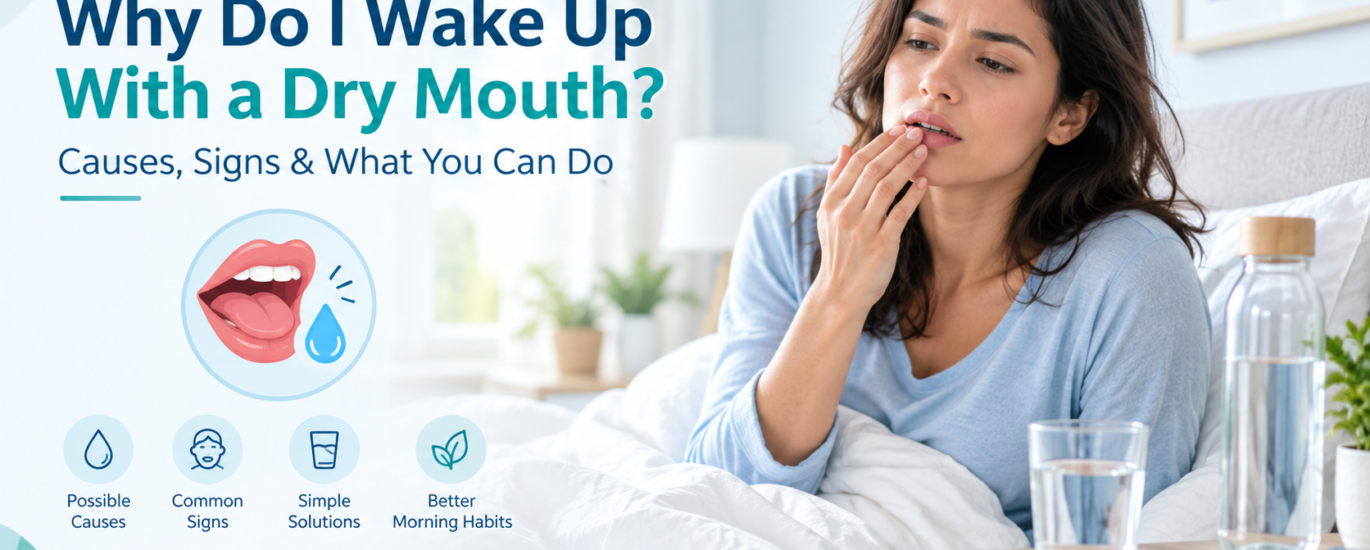
Waking up with a dry mouth occasionally is common, especially after sleeping for several hours without drinking water. But if your mouth feels dry almost every morning, your tongue feels sticky, your throat is uncomfortable, or you frequently wake up needing water, it may be worth looking at what is causing it.
Dry mouth, medically known as xerostomia, happens when the mouth does not have enough saliva. Saliva is important because it helps keep the mouth moist, supports chewing and swallowing, and helps protect teeth and oral tissues. The National Institute of Dental and Craniofacial Research (NIDCR) notes that persistent dry mouth can increase the risk of problems such as tooth decay and oral infections.
What Does Dry Mouth Feel Like?
Dry mouth is more than simply feeling thirsty in the morning. Common signs can include:
- A sticky or dry feeling inside the mouth
- Dry or rough tongue
- Cracked lips
- Dry throat
- Difficulty chewing or swallowing
- Changes in taste
- Bad breath
- Mouth soreness
- A frequent need to sip water
If these symptoms happen repeatedly, identifying the underlying cause can be more helpful than simply drinking more water.
Why Do You Wake Up With a Dry Mouth?
Several different factors can contribute to morning dry mouth.
1. Not Drinking Enough Fluids
Dehydration is one possible reason for a dry mouth. Your body continuously loses water through breathing, sweating and urination, so inadequate fluid intake can contribute to dehydration.
NIH guidance explains that thirst, dry mouth, headache and darker urine can be signs that you may not be getting enough fluid.
Try keeping water available during the day and drinking regularly rather than waiting until you feel extremely thirsty.
2. Sleeping With Your Mouth Open
Mouth breathing can dry the tissues inside your mouth during sleep. This may happen because of nasal congestion, allergies, a blocked nose or other factors affecting nighttime breathing.
If you regularly wake up with a very dry mouth and also experience loud snoring or other sleep-related symptoms, discuss the issue with a healthcare professional.
3. Certain Medications
Many medications can contribute to dry mouth. NIDCR notes that hundreds of medicines can reduce saliva production, including some medicines used for blood pressure, depression and bladder-control problems.
If you suspect that a medication is causing your symptoms, do not stop taking it on your own. Instead, ask your doctor or pharmacist whether dry mouth is a known side effect and whether there are appropriate alternatives or management strategies.
4. Caffeine and Alcohol
Caffeine and alcohol can contribute to dryness in some people. If you regularly consume coffee, tea or alcoholic drinks later in the day and notice that your mouth feels particularly dry overnight, consider discussing your habits with your healthcare professional and observing whether reducing them changes your symptoms.
5. Dry Bedroom Air
Indoor heating, air conditioning or generally dry air can make your mouth and throat feel uncomfortable overnight.
A humidifier may help some people, particularly when dry air is contributing to nighttime discomfort. Keeping the bedroom comfortably ventilated and avoiding excessively dry conditions may also help.
6. Health Conditions
Persistent dry mouth can sometimes be associated with an underlying health condition.
NIDCR lists conditions such as diabetes and Sjögren’s disease among possible causes of dry mouth.
This does not mean that having a dry mouth automatically indicates a medical condition. However, persistent or unexplained symptoms deserve professional evaluation.
Is Morning Dry Mouth a Sign of Dehydration?
It can be, but dry mouth alone does not prove that you are dehydrated.
Other possible signs of dehydration include:
- Increased thirst
- Dark-colored urine
- Urinating less often
- Headache
- Tiredness
- Dizziness or light-headedness
More severe dehydration can cause confusion, fainting and other serious symptoms.
If you have significant fluid loss from vomiting or diarrhea, dehydration can develop more quickly. Our guide on what to eat when you have diarrhea also explains why replacing fluids and electrolytes is important during digestive illness.
Simple Ways to Reduce Morning Dry Mouth
You can try several everyday habits to make your mouth feel more comfortable.
Drink Water Regularly
Rather than drinking a large amount only before bed, spread your fluid intake throughout the day.
Your individual fluid needs can vary depending on factors such as activity, climate, diet and health conditions.
Keep Water Beside Your Bed
A glass or bottle of water beside your bed can make it easier to take a few sips if you wake up feeling dry.
However, if you regularly wake several times every night because you are extremely thirsty, speak with a healthcare professional rather than treating the symptom only with water.
Practice Good Oral Hygiene
Dry mouth can increase the risk of dental problems because saliva helps protect teeth and oral tissues.
Brush your teeth regularly with fluoride toothpaste, floss or clean between your teeth as recommended, and maintain routine dental checkups.
Consider Sugar-Free Gum
NIDCR recommends sugarless gum or sugarless hard candy as options that may stimulate saliva production.
Choose products appropriate for your dental health and avoid excessive sugary snacks or drinks.
Review Your Evening Habits
Consider whether late-day caffeine, alcohol, salty foods or other habits seem to make your mouth feel drier overnight.
Keeping a simple record for a week can help you identify patterns.
Can Your Diet Affect Dry Mouth?
Your overall diet can influence hydration and general health.
Foods with naturally high water content, such as many fruits and vegetables, can contribute to overall fluid intake. A balanced diet also supports general nutritional health.
For digestive health, fiber is another important part of a balanced eating pattern. You can read our related guide on high-fiber foods for regularity for practical food choices.
When increasing fiber, remember that adequate fluid intake is also important. My Medi Times explains that gradually increasing fiber and drinking enough water can help the body adjust.
What Should You Avoid If You Have Dry Mouth?
Depending on the cause, some habits may make dryness worse.
Consider limiting:
- Excessive caffeine
- Alcohol
- Tobacco
- Very salty foods
- Sugary drinks
- Foods that irritate a sensitive mouth
NIDCR specifically recommends avoiding tobacco and alcohol and limiting caffeine when managing dry mouth symptoms.
When Should You See a Doctor or Dentist?
Occasional morning dryness may not be a major concern. However, persistent dry mouth should not simply be ignored.
Make an appointment with your doctor or dentist if:
- Dry mouth continues for several weeks
- You have difficulty swallowing or speaking
- You frequently develop mouth sores
- You have persistent bad breath
- Your teeth are developing more cavities than usual
- You have repeated mouth infections
- You suspect a medication is causing the problem
- You have other unexplained symptoms
NIDCR recommends seeing a dentist or doctor when dry mouth persists because identifying the underlying cause is important for appropriate management.
Can Dry Mouth Affect Your Teeth?
Yes. Saliva plays an important role in oral health. It helps wash away food particles and contains minerals that help protect teeth.
When saliva production is reduced for a prolonged period, the risk of tooth decay and oral infections can increase.
That is why persistent dry mouth is not just an inconvenience—it can become an oral-health issue if left unmanaged.
Morning Dry Mouth: A Simple Checklist
If you frequently wake up with a dry mouth, consider these questions:
During the day:
- Am I drinking fluids regularly?
- Is my urine frequently dark?
- Am I consuming large amounts of caffeine?
- Do I drink alcohol regularly?
At night:
- Do I sleep with my mouth open?
- Is my nose frequently blocked?
- Is the bedroom air very dry?
- Do I snore heavily?
For your health:
- Have I recently started a new medication?
- Do I have other symptoms?
- Have I noticed more dental problems?
- Has the dryness continued for weeks?
These questions cannot diagnose the cause, but they can help you identify useful information to discuss with a healthcare professional.
Final Thoughts
Waking up with a dry mouth can have simple explanations, such as inadequate fluid intake or sleeping with your mouth open. However, persistent dry mouth can also be related to medications, dehydration or certain health conditions.
Start with practical habits such as maintaining regular fluid intake, practicing good oral hygiene and reviewing possible triggers. If the problem continues or is accompanied by other symptoms, talk with your dentist or doctor.
A dry mouth every morning is a symptom worth paying attention to—not something you always have to live with.
Medical Disclaimer
This article is intended for general educational purposes and does not provide personalized medical advice, diagnosis or treatment. If you have persistent symptoms or concerns about your health, consult a qualified healthcare professional.
Trusted External References
For additional evidence-based information, visit the National Institute of Dental and Craniofacial Research (NIDCR) for information about dry mouth causes, symptoms and management. You can also read the NIH guide to hydration for information about fluid balance and dehydration.