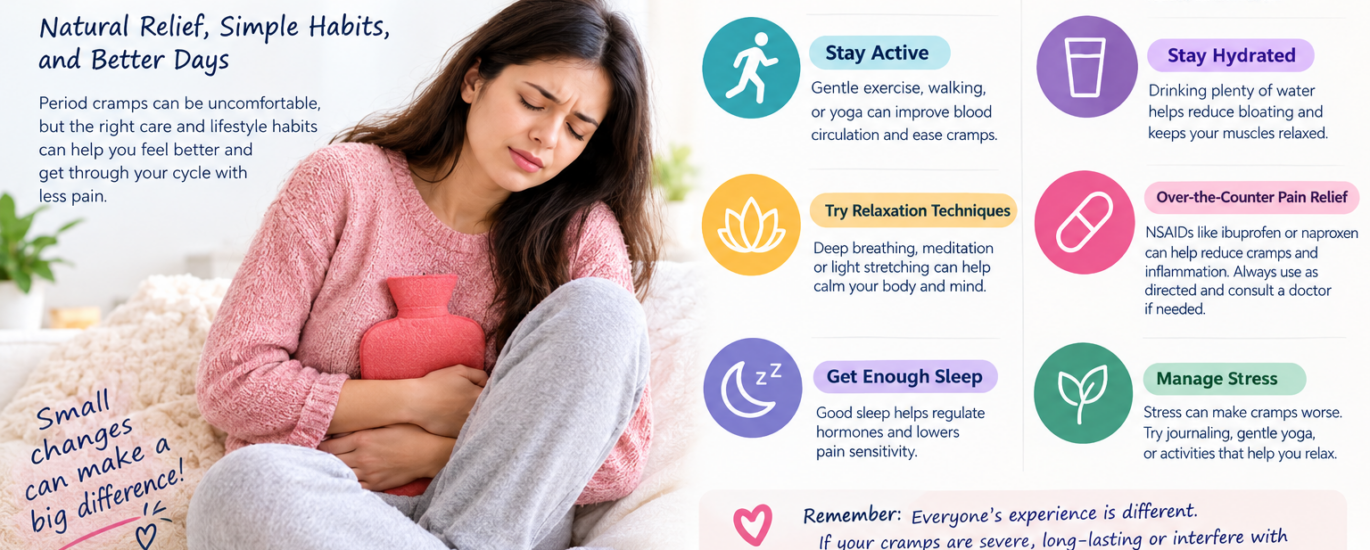
Period cramps can turn an otherwise normal day into an uncomfortable one. For some people, the pain is mild and manageable, while for others, cramps can interfere with work, exercise, sleep, or everyday activities. The good news is that several simple approaches may help reduce period pain and make those days easier to manage.
Period pain, also called dysmenorrhea, commonly occurs around the beginning of menstruation. It happens as the uterus contracts during the period. Pain may be felt in the lower abdomen and can sometimes spread toward the back or thighs.
From applying heat to staying gently active, there are several options worth trying. However, very painful or unusually persistent cramps should not simply be ignored.
What Causes Period Cramps?
During menstruation, the uterus contracts to help shed its lining. Hormone-like substances called prostaglandins are involved in these contractions and can contribute to menstrual pain.
Typical period cramps may feel like:
- Dull or aching pain in the lower abdomen
- Tightness or pressure
- Intermittent sharp cramps
- Pain that spreads to the lower back or thighs
- Tiredness or general discomfort
Period pain often occurs just before or around the beginning of a period and may last for a few days.
What Helps With Period Cramps?
1. Use a Heating Pad or Warm Compress
Heat is one of the simplest ways to manage menstrual discomfort. Placing a heating pad or warm water bottle on the lower abdomen may help relax muscles and ease cramps.
A warm bath or shower can also provide soothing warmth while helping the body relax. If using a hot water bottle, avoid placing it directly against the skin for prolonged periods to reduce the risk of burns.
2. Try Gentle Exercise
When cramps hurt, exercising may be the last thing you want to do. However, gentle movement can be helpful for some people.
Consider low-impact activities such as:
- Walking
- Gentle yoga
- Stretching
- Swimming
- Light cycling
You do not need to perform an intense workout. Even a short walk or gentle stretching session may be easier to tolerate during your period.
3. Massage Your Lower Abdomen
Gentle massage around the lower abdomen or lower back may help you relax when cramps occur. Try slow, comfortable circular movements rather than applying excessive pressure.
Combining a gentle massage with warmth can make your self-care routine more relaxing.
4. Stay Hydrated
Drinking enough fluids is an important part of general health, particularly during menstruation. Water can also be a better everyday choice than frequently consuming sugary beverages.
Warm drinks may feel particularly comforting when you are experiencing cramps, although there is no single drink that can eliminate period pain.
5. Eat a Balanced Diet
Your diet cannot instantly stop menstrual cramps, but eating a balanced variety of foods supports overall health.
Include foods such as:
- Vegetables and fruits
- Whole grains
- Beans and lentils
- Eggs and other protein-rich foods
- Nuts and seeds
- Fish or other sources of healthy fats
If your periods are heavy, paying attention to iron-rich foods can also be important. Foods such as lentils, beans, chickpeas, eggs, meat, seeds, and dark green vegetables provide dietary iron.
6. Practice Relaxation Techniques
Pain and stress can make an uncomfortable day feel even harder. Relaxation techniques may help you feel calmer while your body is dealing with menstrual discomfort.
You could try:
- Deep breathing
- Meditation
- Gentle stretching
- Relaxing music
- Journaling
- A warm bath
- Quiet time away from screens
These practices are not a substitute for medical treatment when pain is severe, but they can be useful additions to a personal self-care routine.
7. Get Enough Rest and Sleep
Some people feel particularly tired during their periods. Giving yourself enough time to rest can help you cope with discomfort.
Try to maintain a regular sleep schedule and create a comfortable nighttime routine. If cramps are repeatedly disturbing your sleep, consider discussing the problem with a healthcare professional.
8. Consider Over-the-Counter Pain Relief
Over-the-counter pain medicines can help with period pain. Ibuprofen is an NSAID and is commonly used for painful periods.
However, ibuprofen and other NSAIDs are not suitable for everyone. People with certain stomach, kidney, liver, heart, or asthma-related problems may need to avoid them or seek medical advice first. NSAIDs can also interact with some medicines.
Always follow the instructions on the medicine packaging and ask a pharmacist or doctor if you are unsure whether a medicine is appropriate for you.
Can Lifestyle Changes Reduce Period Pain?
For some people, maintaining healthy habits throughout the month may make periods easier to manage.
Regular physical activity, a balanced diet, sufficient sleep, and stress-management practices can support general wellbeing. Keeping a menstrual diary can also help you identify patterns in pain, bleeding, and other symptoms.
If your symptoms are changing from month to month, recording them can provide useful information when speaking with a healthcare professional.
When Should You See a Doctor About Period Cramps?
Period cramps are common, but severe pain should not automatically be considered normal.
Speak with a healthcare professional if:
- Your period pain is severe or getting worse
- Pain interferes with work, school, sleep, or normal activities
- Your periods suddenly become much heavier
- Your periods become irregular
- You experience pain during sex
- You have pain when urinating or having a bowel movement
- You experience bleeding between periods
- Your usual menstrual pattern changes
- Pain does not improve with usual self-care
Severe menstrual pain can sometimes be associated with conditions such as endometriosis, adenomyosis, fibroids, or pelvic inflammatory disease.
Final Thoughts
Period cramps can be uncomfortable, but you do not necessarily have to simply put up with them. Simple measures such as heat, gentle exercise, massage, hydration, rest, relaxation, and appropriate pain relief may help you feel more comfortable.
Most importantly, pay attention to changes in your usual period pattern. If pain becomes severe, persistent, or starts affecting your everyday life, getting medical advice can help identify the underlying cause and provide appropriate treatment.
Frequently Asked Questions
What is the fastest way to relieve period cramps?
Applying gentle heat to the lower abdomen, taking a warm bath or shower, and using an appropriate pain reliever can provide relief for some people. Gentle movement may also help.
Does walking help period cramps?
Walking and other gentle exercises may help reduce period discomfort for some people. Start slowly and stop if exercise makes your pain worse.
Does a heating pad help period pain?
Yes. A heating pad or warm water bottle applied safely to the abdomen may help ease menstrual cramps.
Can diet help with period cramps?
A balanced diet supports overall health, but no particular food should be considered a guaranteed cure for menstrual cramps. Focus on a varied diet containing vegetables, fruits, whole grains, protein-rich foods, and healthy fats.
Are severe period cramps normal?
Mild menstrual discomfort is common, but severe pain that interferes with everyday activities deserves medical attention. Persistent or unusually severe cramps can sometimes be linked to an underlying condition.
Can period cramps be treated?
Yes. Treatment depends on the cause and severity. Options can include self-care measures, pain medicines, hormonal treatments, and other medical treatments when an underlying condition is involved.